I
knew the “This and That” post would draw some interesting responses, but I
didn’t see it moving into the arena it has. Some of the questions being asked
are quite insightful and I have some of the answers. For those answers I don’t
have, David Rudiak will probably provide some additional commentary to help us
understand the situation.
According
to Stan Friedman, he was in Baton Rouge on February 20, 1978, when one of the
directors of a television station told Friedman he should talk to Jesse Marcel.
Marcel said that he had handled pieces of a flying saucer, and though Friedman
said he was dubious, he took down Marcel’s name and using directory assistance
(does that still exist?) was given Marcel’s telephone number. At the airport
with some time to spare, he called Marcel. According to Friedman, Marcel
related to him, during that telephone conversation, the details of the crash,
though Marcel couldn’t remember the date. He knew it was Roswell where it
happened.
According
to Friedman’s book, Crash at Corona,
it seems Marcel had already
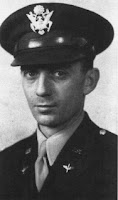 |
| Jesse Marcel |
formed the idea that the debris was left by
something alien. Friedman quotes indirectly from Marcel (which means it is
Friedman telling us what Marcel said), but I don’t know if the quotes came from
that first conversation or if in writing the book and knowing the full story in
the 1990s that he recreated the quotes from other, later interviews. Since this
was a telephone interview using an airport telephone, I suspect there is no
tape.
On
April 7, 1978, according to Len Stringfield, he linked a Chicago reporter,
Steve Tom (I use the term reporter though Stringfield actually identified him
as an NBC radio newsman) to Jesse Marcel at his home in Houma, LA. Marcel again
talked about the event, the strange material. According to Stringfield, Marcel
said that when the press learned about the retrieval operation and “To get them
off my back, I told them we were recovering a downed weather balloon.”
In
his Status Report Number II,
Stringfield wrote, “Since the Major’s story got publicity, it has been said by
some researchers that the retrieved fragments were possibly part of the Skyhook
balloon, at that time classified as Secret. On October 5, 1979, I called him
and got this comment:
The
material I gathered did not resemble anything off a balloon. A balloon, of any
kind could not have exploded and spread its debris over a broad area… I was
later told that a military team from my base was sent to rake the entire area.
I
don’t know if Stringfield recorded any of these conversations with Marcel.
After Stringfield died, his files were donated to MUFON which restricts access
to them (and most of their other material). Those in the Chicago area might try
to find a recording of Marcel on the NBC affiliate there in 1978, though I
suspect Mark Rodeghier, who found the “Headline Edition” from ABC probably
already checked on that.
Bob
Pratt interviewed Marcel on December 8, 1979. I have posted the exact
transcript of that interview to this blog at:
Karl
Pflock published a cleaned up version of this in his book, Roswell: Inconvenient Facts and the Will to Believe. As I have
noted, in his cleaned up version, some of the problems with the Pratt interview
were, well, cleaned up. In one place the insertion of a comma changes the
meaning of the sentence.
There
is another point that raises questions and it surfaces in both the transcript
and the article that Pratt wrote. According to that article:
Wreckage
from the UFO “was scattered as far as you could see,” revealed Marcel who was
awarded five air medals for shooting down five enemy aircraft on bombers in
World War 2. [What a bizarre sentence from a professional writer.]
As
we all know, Marcel was awarded two Air Medals for combat missions during that
war. There are no indications that he shot down any enemy aircraft and I don’t
know if the error was one of Pratt’s misunderstanding what Marcel said, or if
it was a claim made by Marcel. I did ask Pratt if he had retained the tape
recording but he told me that once the story had been published, they reused
the tapes… It just shows that you never know what is going to become important.
Here’s
what I do know at this point. The first Friedman interview was by telephone
while Friedman was at the airport. Marcel didn’t say anything about the
photographs and while in today’s world, if Friedman had photographs, he could
have shown them to Marcel using the Internet, in 1978, that capability just
didn’t exist. Besides, Marcel wasn’t sure of the date and it was Bill Moore who
finally found the newspaper articles that included pictures of Marcel so
Friedman didn’t have the pictures then and didn’t know they existed.
The
subsequent Moore/Friedman interviews were apparently also conducted over the
telephone, according to a quote attributed to him in Linda Corley’s book about
Marcel and Roswell. According to her taped interview, Marcel said, “Now those
guys, Charles Berlitz and William Moore, I bet I have spent as much as ten
hours along these telephones with these two guys. I’ve never met either one of
them.”
Corley
questioned him on this point and Marcel said, “I never met them. They
interviewed me on the phone.”
At
that point, I’m sure that they have copies of the newspaper clippings some of
which contained a picture of Marcel and the balloon wreckage and might have
even gotten prints of the pictures from the Fort
Worth Star - Telegram, but they couldn’t show these pictures to Marcel over
the telephone. According to Berlitz and Moore, Marcel told them, over the
telephone:
General
Ramey allowed some members of the press in to take a picture of this stuff.
They took one picture of me on the floor holding up some of the
less-interesting metallic debris. The press was allowed to photograph this, but
were not allowed far enough into the room to touch it. The stuff in that one
photo was pieces of the actual stuff we found. It was not a staged photo. Then
they allowed photos. Those photos were taken while the actual wreckage was
already on its way to Wright Field. I believe these were taken with the general
and one of his aides…
If
we look at that, and the captions about where Berlitz and Moore got the
pictures, we see that there was some manipulation going on there. They got a
quote from Marcel that endorsed the picture of him with some of the real
debris, but we don’t know if it was the whole picture or the cropped version
they printed. What is clear is that when Johnny Mann showed him the pictures in
The Roswell Incident, Marcel said
they didn’t show the real debris.
Yes,
I know some of the skeptics just can’t imagine Marcel not keeping copies of the
newspaper articles that mentioned his name but then suggest the whole flying
saucer brouhaha was such an embarrassment to him that he would, decades later,
attempt to spin the story. But I know that things get lost as the years pass
and I know that my picture appeared in the Denver
Post in the early 1970s receiving a military award for service in Vietnam
but I do not have a copy of that article.
I
suggest that it is possible that Marcel, not having seen the heavily cropped pictures
that would be published in The Roswell
Incident because the interviews were conducted over the telephone, would
remember pictures being taken at the time but might have not remembered the
sequence. His statement about him being with the real debris when the pictures
were taken could easily refer to another event and not what had transpired in
Ramey’s office. So, when shown copies of the pictures from Ramey’s office, he
rightly said, “That’s not the stuff I picked up.”
This
seems to be a plausible explanation for this dilemma. He was photographed with
some of the real debris, but those pictures were not taken in Ramey’s office.
It wasn’t Marcel getting coached into what to say about it, but how he actually
remembered the events. Though there is another problem with this analysis and
that is Marcel told Corley that on orders for Ramey, he had covered the real
debris with the brown paper that is seen in the uncropped versions of all the
pictures taken in Ramey’s office. This suggests that Marcel’s memories of those
events might not be completely accurate.
 |
Jesse Marcel, standing and pointing, briefing flight crews during the Second World War.
Photo copyright by Kevin Randle |
There
are other problems that arise from these transcripts of earlier interviews.
Pratt said that Marcel was awarded five Air Medals for shooting down five enemy
aircraft, but given Pratt’s transcript and other information, this mistake
might be Pratt’s rather than Marcel’s. In the transcripts of the raw footage of
UFOs Are Real, it said, “10 April
1942 volunteered for active service… 1st assignment Washington five
Air Medals, the Bronze Star and several comendations [exactly as written out in
the transcript].”
Since
there is no mention of the five enemy aircraft, it would seem that the mistake
was Pratt’s. The other problem is that there is only documentation for two Air
Medals. As I have said before, my records did not contain the correct number of
Air Medals, so we might have a similar situation. This just might not be
sufficient reason to reject, out of hand, all that Marcel said.
What
is more disturbing is his claim to have received a commendation for performing
an appendectomy while in the service. This is something that should be recorded
in his military record but I find nothing about it. I did find mention of
another commendation for Marcel, but it was for service during Operation
Crossroads. Maybe the commendation for the emergency surgery slipped through
the cracks, but there comes a point when you can no longer blame Army
inefficiency for the errors in the record (though I have said that if you do
something wrong, that note has the permanence of the Pyramids and if you do
something right it has the half-life of a mayfly).
There
are two things I found in these transcripts that are interesting. First, Marcel
said that after loading his car with the debris, “I stopped by the house had
left the day before and son and wife were waiting for me.”
This
is curious because the story had always seemed to be that he had awakened them
to show them the strange debris. This suggests that he had stopped by so they
wouldn’t worry and that it wasn’t very early in the morning but late evening. A
minor problem at best.
In
the transcript (which, by the way, is strange) it is noted that on “Tape 2” at
the 24:16 minute mark, Marcel apparently told them that Haut had issued the
press release before he had even returned from the field. The exact quote on
this transcript is, “He (Walt Haut had released statement to press before Jesse
had even returned home that night.” (Yes, this is how it was written out, so it
is not exactly Marcel’s words.)
Apparently
Marcel said that his wife had been “pestered by the news media.”
In
Linda Corley’s book, Marcel makes a similar statement. He said, “She [wife]
didn’t even know where I was. By the time I got home, she had already faced the
press that was out there.”
What
this does is screw up every time line created for this because we have the
press release going out before Marcel got home… which had to be late afternoon at
best given the distance from the debris field to Roswell even making the best
time possible. Then we need to get Marcel on an aircraft early enough to get to
Fort Worth in time to have his picture taken with the balloon debris.
It
is possible, of course, that Marcel had confused coming home from the debris
field with his coming home from Fort Worth after his quick trip there. He seems
to have mixed up elements of the two events, confusing the timing, but then,
that is just my speculation.
Then
it gets worse, if possible. Marcel is quoted in the transcript, apparently
paraphrasing General Ramey, “You can go ahead and scatter some of those pieces
on the floor for the photographers and press but make sure they don’t get any
details about anything.”
There
was a question, “Was that the actual material you had found?”
“I
prepared that for the press. (That big piece was not part of it). [parens in
original document.]”
And
then it gets better. Marcel said, “Let me show you something. There’s a picture
of the same room [Ramey’s office, I will assume here] It’s not the material I
brought there.”
Then
on “Tape 3” comes more information. The director or the interviewer or the one
asking questions said, “I talk about book I’m showing him [Which has to be
something with the various pictures from Ramey’s office.] Book in Jesse’s lap
showing warrant officer [has to be Irving Newton and that rules out The Roswell Incident]. The director
asked, “This is not the material you found?” Marcel said, “Definitely not.”
The
trouble here is that Marcel in the same film said that if he was in the
photographs it was the real stuff and if it was anyone else, it was the fake.
But now we learn that he was shown those photographs during that filming and
before anyone could teach him the right answer, said that it wasn’t the
material he had brought from Roswell.
The
questions then, have been answered, sort of. We learn that the first interview
was probably not recorded and are treated to Friedman’s recollections of what
was said. We learn that the interviews of Marcel by Berlitz and Moore were
conducted over the telephone. We do find quotes from Marcel that seem to
contradict the story as it has been told for all these years which is quite
troubling. And we find other quotes that seem to support that story, which
suggests some manipulation by the various UFO researchers. Is it enough to
reject now what Marcel said? Depends on your point of view, but we do have more
information that suggests Marcel’s memories are not completely reliable on many
of these points and at this time, that might be the best we can do.
(Note:
For those interested, this has grown much larger than I anticipated. I looked
through Marcel’s service record again, I reviewed the other material in that
file, rereading after decades some of the partial transcripts that I have which
provide some disturbing information, looked again a Linda Corley’s book to see
what she said about the early interviews with Marcel, and reviewed what
Friedman had published. There is more to this story, which I’ll get into some
form for publication.)