Showing posts with label 509th Bomb Group. Show all posts

Monday, August 08, 2022

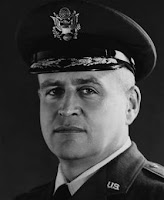
Roswell Intelligence Officer Dalton Smith


I have been asked many times if there is anything else we can learn about the Roswell UFO crash now that the first-hand witnesses are no longer available. We are now talking with the second and third hand witnesses, meaning the children and grandchildren of those who were there. As the stories become farther removed from the original, there are distortions that develop through no fault of those telling them. It makes it more difficult to get at the truth.

However, to my surprise, sometimes things happen to suggest there are some important avenues that we can follow. Just this last week, I received an email asking that if I had ever heard of Dalton Smith. According to the email, Smith was an intelligence officer who had been assigned to the 509th Bomb Group in Roswell in 1947. The correspondent wanted to know if that was true, or more precisely, what I knew about Smith.

The late Dalton Smith

In all the years of research, Smith’s name had never come up. In the discussions with those who had been there including the counterintelligence soldiers assigned, no one had mentioned him. We knew of James Breece who had died long before we began our research, but nothing about Smith.

The first place to look was the index for the 509th Yearbook. George Eberhart had created the index decades ago and for those interested, it is only good for my copy of the Yearbook. I had all the pages that had information and photographs of those assigned to the base but the numbering didn’t include some of the other pages that were, more or less, irrelevant. So, if you attempt to apply that index to other copies, it just won’t match. But I digress.

Smith’s name was not among those in the Yearbook. Walter Haut, who created the Yearbook told me that some 10 to 20 percent of the personnel assigned to the base were not in the book. Next stop was the base telephone directory. I quickly found Major Dalton Smith listed with a telephone number of 312.

On the same page and not far from Smith’s name was that of Jesse Marcel and Marcel’s telephone number was 312. That meant that Smith had shared an office and a telephone with Marcel, which put him right in the middle of the activity in 1947.

Given that, I knew that Breece was assigned to the intelligence section, but his telephone number was 459. Breece was not in the same office as Marcel. Given that I’d discovered that Smith and Marcel shared a telephone, I wondered if I could find a similar pairing with Breece. I didn’t find another person who shared his telephone but did find that he was located in Building 31, as were Marcel and Smith.

Under Intelligence Officer in that phone book, I learned that the base S-2 (Intelligence) number was 312, which would be Marcel. The Security Office was 316, Combat Intelligence (Breece) was 459, and the Historical Office was 312.

I also learned that Building 31 was apparently assigned to the 715th Bomb Squadron and housed its Operations, Communications and Personal Equipment offices as well as the base Intelligence Office. It does strike me as strange that the base Intelligence Office is found in a building assigned to a specific squadron, but it’s probably not overly significant.

There is little more to be said about this. I did learn that at the time Smith retired from the Air Force, he was Chief of Staff for Air Force Intelligence at the Pentagon. He left the military after more than 23 years of continuous active duty including World War II, in which he served in Europe and North Africa. Among numerous decorations, he received the Bronze Star Medal, the European-African-Middle East Medal with twelve bronze service stars, and the Korean Service Medal. At one point, he was Deputy for Intelligence in the Far East Air Force Bomber Command in Japan.

When Colonel Smith retired in 1964, the Director of Administrative Services of the U.S. Air Force cited his "sound judgment and high professional ability" during "a long and honorable career."

All of this does verify his service. The telephone directory verifies his position in Roswell at that critical time. There are a few additional leads to follow now. I’ll see what I can learn but I fear I learned all this too late. Smith died in 2013. Had we only known.

Tuesday, August 28, 2018

Edwin Easley and Me


Since we’ve reached a point where evidence has evaporated into opinion, let’s take a look at what Edwin Easley told me. I don’t believe anyone else ever talked to him, so while what is read in the cold prose on the sterile page, I listened to his inflections, his hesitations, and what he said based on my experience as a military
Edwin Easley.
intelligence officer.

First, nothing he said takes us directly to the extraterrestrial in the first interview. He said he was sworn to secrecy, but you could say that this is what is told to those in classified briefings about almost anything. Classified briefings frequently open with a warning that the contents are classified and disclosure to those not cleared can result in a prison term and hefty fine.

Second, he said that he had promised the president that he wouldn’t talk about it. Does that mean he talked to Harry Truman personally, or did Truman send a representative to Roswell to learn what those officers knew and tell them that it wasn’t something they could talk about openly. I believe that Easley told the president’s representative that he wouldn’t talk about it.

Third, that the president was involved moves us from the really mundane. In other words, it suggests that Mogul, for example, is not the answer. The balloon launches in Alamogordo were detailed in the newspaper on July 10, 1947. Clearly, the recovery of the remains of a balloon array wouldn’t have caught the president’s attention, and no one would care if anyone talked about it. True, the purpose was classified, but no one was talking about the purpose, only the activities in New Mexico.

Fourth, is there a terrestrial explanation for this sort of response? In 1947, the size and shape of the atomic bomb was classified. If the 509th Bomb Group had dropped a mock up somewhere in the desert, that might have required some sort of higher level response. I’m not sure what the intelligence value would have been just by seeing the mock up and estimating the size, but it was classified.

So, we have an explanation for the effort to conceal what had been found near Roswell that isn’t of alien manufacture. It is something that would have been concealed, though you would think that Jesse Marcel, Sr., would know what the bomb looked like, and would have known what it was, but that’s an argument for later.

What else did Easley say during that conversation?

Well, he said he was the provost marshal, or rather confirmed that he was. But, heck, I had that information from the Yearbook and the Unit History, and from some of those who served at Roswell in 1947. No great revelation there.

When I asked if he had been out to the crash site, he said, “I can’t talk about it. I told you that.”

Well, that does, sort of, suggest he had been out to the crash site, but doesn’t move us to the extraterrestrial. We all know that something fell in 1947, it’s the identification of it that has us somewhat confused.

Later, however, when I mention that Colonel Briley had said that the provost marshal had been out to the crash site, Easley said, “He doesn’t know what he was talking about.”

So, that sort of suggests that he wasn’t out to the crash site. However, as the provost marshal, he would have had the ultimate responsibility for the security at the crash site. He certainly could delegate it to another of his officers, but since it is his responsibility, he would have gone out at least once. Whatever happened, Easley going out or not, doesn’t take us to the extraterrestrial.

James Breece
He does suggest that we talk to the rancher, but doesn’t really remember the name. He suggests we talk to Breece, though he called him Freeze. We learned that Breece had died before any of us got deep into the investigation.

In the end, the important point here is that he mentioned having been sworn to secrecy and that he promised the president, or the president’s representative that he wouldn’t talk about it. This merely suggests that something important had happened, but nothing that takes us to the extraterrestrial.

I talked to him three more times about this. The second was on June 23, 1990. The first thing that I asked him was, “How are you doing?”
He said, “Pretty good.”

I asked about Blanchard’s staff meetings and Easley said that he attended those, but didn’t remember much about the meeting held on July 8, 1947. My thought here was that had it been a normal meeting, he probably wouldn’t remember anything, but then, had they discussed the material that Marcel found, if it was of alien manufacture, that
William Blanchard
would have made the meeting special.

I asked if his MPs would have guarded the airplanes involved in transporting the debris, and he said they guarded all the airplanes, meaning all those assigned to the 509th. He did say that none of the MPs were on the flights to Wright Field. That didn’t mean much because they were never used as guards on the flights anyway.

He told me that he hadn’t talked to anyone else about this, meaning, none of the people he knew in 1947 or any other investigators. That means that my interviews with him are unique.

I had thought that if I could arrange for a general officer to call to tell him that he could speak with me candidly about these events, it might free things up. His response was, “I don’t think so.”
He confirmed, again, that he was in Roswell in July, 1947, but we’d already had the documentation to prove it.

He said again, that he really couldn’t talk about it. In fact, at one point I suggested that he seemed to be uncomfortable about talking about this and he said, “Yeah. Sure do.”

The conversation was fairly short, but friendly. I learned very little from it, though his reluctance to talk about it suggested something big had happened. It doesn’t mean that it was extraterrestrial, only that it was something that had been classified in 1947 (not necessarily meaning covered up). He knew that I was thinking of extraterrestrial, but he wasn’t giving me much in the way of information.

The last recorded conversation was on August 13, 1990. It was a wide-ranging conversation that wasn’t really an interview. In fact, the first ten or fifteen minutes was just that, conversation. I did mention that we, meaning Don Schmitt and I, might be down in Fort Worth and wondered if we might stop by. He said, “Fine by me.”

I finally said, “I haven’t asked any specific questions.”

Easley said, “I noticed that.”

We did finally move onto some questions, but it was more about the people who had been assigned to the Roswell Army Air Field in 1947. I asked if he was aware of the guards used outside of town had been transferred out of Roswell not long after this event. He said, “No. Just not aware of it.”

But he did say that the entire 1395 MP Company had been transferred not long after everything ended. My impression here was that the transfer had been planned prior to July because the company wasn’t needed in Roswell. Easley had the 390th Air Service Squadron whose job it was to patrol the base, mount the guard, and the like. In other words, their duties mirrored those of the MP company.

I then began to look through the Yearbook index that George Eberhart had prepared. We’re just chatting about the people he might have known and where they might have gone after leaving Roswell. I’m looking for people that Easley would have known such as the senior officers and NCOs and who might have been involved in the recovery.
He then volunteered, without a real question from me, “There weren’t too many of them involved in that.”

This suggested that the number of officers and men involved in the operation, whatever it might have been, was limited. You can mount a guard, create a perimeter around something but the men standing guard are far enough away, or the object is masked in some fashion, that they don’t know what it is all about. They just know that they had been given a guard assignment on that day. Again, an interesting little piece of information, but not one that takes us to the extraterrestrial.

The next time that I talked to Easley was from the office of the Center for UFO Studies and was the last time. Since I was spending a couple of hundred dollars a month on telephone bills (back before cell phones and unlimited talk), the chance to follow up on some calls without having to pay for them was important. One of those I called was Edwin Easley. Since I didn’t have a recorder on the telephone, I took notes.

Interestingly, one of the things he said was that he didn’t remember the MPs being transferred after the event, other than the whole 1395th. In the Unit History, there is a letter in which he mentions that there had been a high turnover in the 390th Air Service Squadron. They were being transferred in large numbers. I thought, based on the letter, it was a “train the trainers” type situation. In other words, these men were now trained in dealing with atomic weapons and security and since other units were now going to become part of the atomic strike force, more trained MPs were required. Those in Roswell were transferred so that they could train other MPs at other bases in the procedures related to atomic weapons.

He also said that the material had been sent to Dayton, but then, there is the FBI document which made that suggestion back in 1947. This does not take us to the extraterrestrial. It merely means that the debris, whatever it might have been, was sent to Dayton and the Air Materiel Command for identification as far as he knew. Easley said that this had been a verbal order from Colonel Blanchard, the 509th commander, which would be a little unusual, but not overwhelming so. Paperwork to cover the flight could be created later.

The shipment to Dayton also fits in with some of what those who were working the balloon projects had said about the events in 1947. They had been asked to identify the debris that came from Roswell, according to them. It might have been from one of their balloon projects that was responsible. Easley said nothing about balloon projects.

The Roswell Guest House. Photo copyright by
Kevin Randle.
Easley also said that Brazel had been brought to the base for several days. Easley was not involved in the interrogation of him. He just said that Brazel had been held in the guest house, which is not as bad as being in jail, but if you’re not allowed to leave, it is sort of, the same thing.

He also said that all the paperwork had been sent on to the Pentagon, though I confess, I’m not sure what all that paperwork might have been. Patrick Saunders, the base adjutant in 1947, did tell family members that they had been able to bury the paperwork on all of this. Neither of these points leads to the extraterrestrial.

At the end of the conversation is where I asked him the one important question. I asked if we, meaning Don Schmitt and me, were following the right path. He asked, “What do you mean?”

I said, “We think it was extraterrestrial.”

Easley said, “Let me put it this way, it’s not the wrong path.”

This is the one point in which we moved from the terrestrial to the alien. It is actually the only point in my interviews with Easley that anything like that had come up. Since I was the one talking with him, and I was listening carefully to him, there is little doubt about what he meant.

But let’s look back on some of this. I’d made it a point to mention that I was a fellow military officer and that I had been a pilot in the Army and an intelligence officer in the Air Force. I told him that one of the things that I found funny was that when I went to Dayton, to Wright-Patterson AFB to meet General Exon, we had gone to lunch at the officer’s club. Exon had told me to park in one of the three spots reserved for general officers.

I had built up a rapport with Easley. He was comfortable talking to me and I was careful to keep the conversation light. We had talked about keeping secrets, and at one point he asked me what I would do in his position. I told him, frankly, that I like to think I would have shared the information, but I told him that I probably wouldn’t. The oath took precedence over what feelings I might have about telling what I knew to those who wanted to know but had no authorization to know it.

I had asked him again that if I knew a general who had been involved in some fashion, who had talked to us, and who had, at one time, been the base commander at Wright-Patterson, would that be helpful. He didn’t think so and I think he knew that the base commander was not necessarily the senior officer on the base. He functioned more as the mayor of a city, overseeing the daily operations that would have included policing the base, maintenance of the facilities and the like. In the Army, they now call that the “Mayor’s Cell.”

In those discussions with Easley, I got the impression he wanted to help as much as he could without violating what he thought of as his promise to the president. No, as I say, I don’t think he actually talked to Harry Truman, but to a representative of Truman, which is, sort of, the same thing.

He didn’t give away much, and I think that most of what he said wasn’t what he considered to be part of the great secret, whatever that great secret might have been. The only slip was the comment that “There weren’t too many involved in that.”

When I asked about following the right path and he mentioned that it wasn’t the wrong path, that was the closest that he came to giving away anything important. Again, in was in the context of a larger conversation that dealt with some of the trivia about Roswell. We had been talking about Brazel being on the base. I believe that he wanted to help as much as he could without violating the oath, which explains the wide-ranging conversations we had which only, occasionally, touched on important, relevant topics.

This explains why I hadn’t made transcripts of these conversations. There are only one or two things that are relevant and the rest were just talks between two former Air Force officers… true, he retired in 1962 and I wasn’t commissioned into the Air Force until some thirteen or fourteen years later, but we did have the bond. I guess it was more of a link than a real bond.

A couple of other things to come out of this. I asked him, at the beginning of each conversation, how he was doing. He always said, “Fine” or “Pretty good.” Can’t believe how those statements have become relevant in the world today.

And I always asked if I had additional questions, would it be all right to call back, and being the gracious individual he was, he always said, “Sure.”

When all is said and done, there isn’t much here for any of us. Clearly, as we all know, something happened. There was an event that was classified. Some of the people at the base were involved and others were not. Easley, as one of the senior officers and the provost marshal, was one of those who were. He only said one thing to me that suggests that the event was extraterrestrial, and that was his round about comment that it was not the wrong path. Not really an admission of much of anything.

If we wish to plug in the statement that comes from Dr. Granik, we have to remember it is, at best, second hand. At worse, it’s probably third hand. If he was not in the room when Easley said, “Oh, the creatures,” then he heard it from family members. He had a professional relationship with one of Easley’s daughters who worked in the same hospital as he did. And please don’t read anything into the comment about professional relationship. I mean that they knew each other, might have taken a lunch together, but had only that professional relationship. I know how the minds of those in the UFO community work… or in reality, disfunction.

I will also note that I have been rejecting, in the last ten years or so, this type of second-hand testimony because it is, well, second hand. Doesn’t mean it is wrong or inaccurate, it just means that there is no way to verify the validity of it, we can’t ask the original source, and what they thought they heard might not have been what was actually said.

I am a little annoyed that Edwin Easley’s reputation had been muddied up slightly. I don’t think he did anything to deserve that and I have said as much in the comments section of the posting found at:


The original source of those comments has been caught lying about all sorts of things. Add to it his confusion between the family of Curry Holden and Edwin Easley, we can reject all that he said about this. Especially when it is remembered that he never talked with Easley.

That leaves back where we started, which is, there isn’t a lot here on which to hang a hat. A couple of comments that can be interpreted in a number of ways and one that suggests, indirectly, the extraterrestrial. In the great scheme of the world, I know that Easley’s one comment doesn’t carry much weight. To make it worse, it was the one time that I didn’t record the conversation. I planned to follow up on it, didn’t know that the time was running out, and tried to arrange things too late. He became ill not long after we talked.

That’s where we are here. An interesting comment, heard only by me and no way to prove he said it. I have my notes, but that doesn’t really do us much good because, as we have seen way too often, notes can be whatever the writer wants them to be.

Easley tells us something happened, some of the personnel on the base were involved, but he doesn’t give away very much. It proves he was an honorable man, trying to keep the secret but wanting to help me in my research. It doesn’t prove much of anything else, when you look at it dispassionately.

Saturday, May 14, 2016

Lt. John (Jack) Trowbridge and Roswell

In the early 1990s, we, meaning Don Schmitt, Stan Friedman and I were having a debate with John Keel about what had fallen in Roswell. He was suggesting it was a Fugo Balloon, that is, a Japanese Balloon Bomb. Research quickly disproved this, though Keel did hang onto the answer longer than I thought necessary. He did write one thing that was important. In the January 1991 issue of Fate, on page 67, Keel wrote, “I suppose by 1999 there will be thousands of Roswell witnesses from that long-gone era.”

Turns out that Keel was right about this. You might ask yourself, “But why bring it up now, some twenty-five years later?”

It is because, as many of you know, I have just completed a book about the Roswell case as it exists in the 21st century, and though I tried to get to everything, there is just so much that I missed a few things. One of those was the testimony of
Lt. John P. Trowbridge
the late First Lieutenant (later Lieutenant Colonel) John P. “Jack” Trowbridge. He had been assigned to the 509th Bomb Group in 1947 and in 2007 he said that he was one of the intelligence officers working with Major Jesse Marcel. He claimed that he had handled the “memory metal” debris that some have mentioned in the past.

He also claimed that he had been over at the Marcel’s to play bridge that night in July 1947 but Jesse wasn’t there at the time. It was fairly late in the evening when they broke up the game because Marcel finally had returned. They apparently went outside to see what Marcel had brought home.

He told Greg Bishop and Nick Redfern at their UFO Mystic blog, “It was aluminum in appearance, there were fragments of aircraft-skin or whatever the thing was, and also some girders, with pictures of… hieroglyphic-like things on it. I took them to be… you know… who knows?... [I]t was interesting. I could get my hand on the material. And the material had some peculiar properties… For example they looked like [Hershey bar] wrappings [very thin foil]… But you squeezed it up in your hands as hard as you could, you let it go, and it returned… to the original shape. Instantly!”

He went on to claim that Marcel brought in some of the debris the next day and they all played with it and then went back to work. Later in the day they were told that nothing had happened and they should not talk about it.

According to that article and then to his obituary, he had been the last known survivor to personally have inspected the debris. This was “a secret he kept for 50 years.”

And I say nonsense. It is the proof of Keel’s theory that more and more people would come forward to tell their tales of seeing the alien debris or the bodies of the alien creatures as time passed.

We know, based on the testimony of Jesse Marcel, Sr., Jesse Marcel, Jr., and Viaud Marcel that this bridge game didn’t happen because none of them ever mentioned it. Jesse Jr. told me, as he did many others, that his father woke him up to show him the debris. He never mentioned other people being there that night or seeing the memory metal that Trowbridge mentioned. His mother didn’t report that either and when Jesse Sr. was interviewed by Linda Corley, there was no mention of any of this.

I have searched through the 509th Unit Histories for the summer of 1947 and I could find no reference to Trowbridge as part of the intelligence section. To be fair, few names were mentioned in those various reports, so it is possible that he was assigned to intelligence but simply not mentioned. I do know that he was assigned to the Headquarters, but then those who had jobs at the group level or in the supporting organizations such as the JAG, or Finance were assigned there for purposes of accounting, pay and the like.


Given the lack of mention of many of the things that Trowbridge claimed, that no one suggested a bridge party on that night, that his account varies from those given by the Marcels, and that he has some of the other facts wrong, I find this account to be unreliable. It is as John Keel said so long ago. There are many people coming forward with their tales of seeing the bodies, seeing the craft or handling the debris, and unless there is some form of corroboration, these stories should be rejected.

Wednesday, May 14, 2014

Who Put the Roswell Press Release on the News Wire?


In the last day or so, I have been asked about the press release issued by Walter Haut concerning the discovery of a flying disk near Roswell. We can argue all day about what it was, but that term was used in the press release. The Roswell Daily Record reported that military had “captured” a flying saucer in the Roswell region. What is interesting now is that some are wondering if the Roswell Daily Record put the press release on the news wire and the source of that information is quoted as evidence is Philip Klass.

In his book, The Real Roswell Crashed Saucer Coverup, Klass wrote, on page 16 (of the hardback), “The newspaper sent its blockbuster story out over the Associated Press wire service, resulting in a deluge of inquiries.”

In a world where the slightest mistake that I have made, even those of more than 40 years, are broadcast today to prove I’m a sloppy researcher, those of the skeptics and debunkers are often overlooked. I point this out because, I’ll now give you the sequence of events and how the story made it into the national press (the term for media at the time).

After a staff meeting held at the 509th Bomb Group on Tuesday, July 8, 1947, the base public affairs officer, First Lieutenant Walter Haut, received a telephone call from Colonel William Blanchard, the Group commander. Haut would later say that he didn’t remember if he was given the details over the phone or if he went to Blanchard’s office. He didn’t remember if Blanchard gave him the completed press release or just the details with instructions to write it. He was then to deliver it to the four media outlets in Roswell, that is, the two radio stations and the two newspapers. In another relatively unimportant discrepancy to this basic story, Haut would say that he drove the release into town, or he would say that he used the telephone and dictated it to them. Either way, the press release went out to the media, and then was put on the news wire by Frank Joyce of radio station KGFL and George Walsh of radio station KSWS. Who got it on the wire first doesn’t really matter to us here because the point is that the Roswell Daily Record did not put in onto the Associated Press wire but we can answer that question as well.

Walsh remembered that Haut had telephoned the press release to him “about mid-day.” He copied the press release exactly or almost exactly, as Haut read it to him over the phone. According to what Walsh told me, he in turn called it into the Associated Press in Albuquerque. From there the release was put on the AP wire and that story was published in a number of newspapers.

Joyce, on the other hand, told me that Haut had brought the press release to him at the radio station. He said that he put it on the United Press news wire and he kept the press release. Fearing that someone would return to confiscate it, he hid it but to no avail. It has since disappeared.

Art McQuiddy, who was the editor of the Roswell Morning Dispatch told me, “I can remember quite a bit about what happened that day. It was about noon and Walter brought in a press release. He’d already been to one of the radio stations, and I raised hell with him about playing favorites.”

Unfortunately for McQuiddy, the Dispatch was a morning newspaper, so there wasn’t much for him to do with the story. He said, “By the time Haut got to me, it hadn’t been ten minutes and the phone started ringing. I didn’t get off the phone until late afternoon… The story died, literally, as fast as it started.” MQuiddy’s timing is slightly off as we’ll see later.

There is a document, created in 1947, that provides the exact times for some of this and helps us understand what was going on. According The Daily Illini, the first of the stories on the Associated Press wire appeared at 4:26 p.m. on the east coast. That would mean that the stories went out from Albuquerque, sometime prior to 2:26 p.m.

The Associated Press version, as it appeared in a number of west coast newspapers said:

The many rumors regarding the flying disc became a reality yesterday when the intelligence office of the 509th Bomb Group of the Eighth Air Force, Roswell Army Air Field, was fortunate enough to gain possession of a disc through the cooperation of one of the local ranchers and the sheriff’s office of Chavez County.
The flying object landed on a ranch near Roswell sometime last week. Not having phone facilities, the rancher stored the disc until such time as he was able to contact the sheriff’s office, who in turn notified Major Jesse A. Marcel of the 509th Bomb Group Intelligence Office.
Action was immediately taken and the disc was picked up at the rancher’s home. It was inspected at the Roswell Army Air Field and subsequently loaned by Major Marcel to higher headquarters.

At 4:30 p.m. (EST), there is the first “add” to the AP story, which mentioned “Lt. Warren Haught [Walter Haut],” who was described as the public information officer at Roswell Field. This new information suggested that the object had been found “last week” and that the object had been sent onto “higher headquarters.”

The original United Press bulletin, which went out fifteen minutes later, at 4:41 p.m. (EST), according to newspaper sources, said:

Roswell, N.M. – The army air forces here today announced a flying disc had been found on a ranch near Roswell and is in army possession.
The Intelligence office reports that it gained possession of the ‘Dis:’ [sic] through the cooperation of a Roswell rancher and Sheriff George Wilson [sic] of Roswell.
The disc landed on a ranch near Roswell sometime last week. Not having phone facilities, the rancher, whose name has not yet been obtained, stored the disc until such time as he was able to contact the Roswell sheriff’s office.
The sheriff’s office notified a major of the 509th Intelligence Office.
Action was taken immediately and the disc was picked up at the rancher’s home and taken to the Roswell Air Base. Following examination, the disc was flown by intelligence officers in a superfortress (B-29) to an undisclosed “Higher Headquarters.”
The air base has refused to give details of construction of the disc or its appearance.
Residents near the ranch on which the disc was found reported seeing a strange blue light several days ago about three o’clock in the morning.

Here’s what all this minutia tells us. Walsh put the story out first with Joyce following by fifteen minutes. The Roswell Daily Record had nothing to do with that. There are two versions of the story that differ enough to suggest that Haut dictated them over the telephone to Walsh and Joyce. What we don’t know is how long the vetting process took, meaning simply, that the time of the two press releases does not reflect the time they arrived in the news wire offices. McQuiddy could be right about the time Haut got there, but it wasn’t all that long after the stories arrived that they were put on the wire.

What’s all this prove? Very little, really. We have been able to assemble, from various documents and newspaper stories, a timeline for the release of the information. Doesn’t mean it was a flying disk from another world, only that we have been able to trace, to a fair degree of accuracy, the sequence of events.

We haven’t been able to learn if Haut met with Blanchard in person or talked to him on the telephone. We don’t know if Haut wrote the release or if Blanchard dictated it to him. I’m not sure that these questions are important today because we do have the release as it appeared in two forms in the newspapers and we do know that it originated with the 509th Bomb Group… Oh, and we know that Philip Klass made up the comment about the Roswell Daily Record putting it on the news wire.

Wednesday, January 30, 2013

Philip Klass Explains it All... Loring AFB

I hate to keep picking on Philip Klass, but I’ve just stumbled on another of his solutions and thought we might look at it. Back in 1975, at Loring Air Force Base in Maine, Sergeant Steven Eichner, was working with Sergeant R. Jones, when Jones saw a red and orange object over the flight line. To both of them the object looked like a “stretched out football” that hovered and then seemed to disappear as the lights went out. It reappeared over the north end of the runway, moving in what they described as “jerky motions.” They began to give chase, maybe just get closer for a better look, and when they turned onto the road that led to the weapons storage area, they saw the UFO some 300 feet in front of them. It was about five feet off the ground and the air around it seemed wavy, such as heat coming off a desert highway. They saw no doors, hatches or windows on it.
 
It wasn’t long before sirens sounded and Eichner said that he saw many flashing blue lights on the Air Force security team coming at them, or rather toward the weapons storage area. They didn’t want to be close by as the Air Police tried to identify the lights and find out what was happening.
That is a quick rundown of what Eichner and his buddy saw that night. I mention it only because in the newspaper column that we’re going to talk about, Eichner was mentioned and his story recounted. This gives us all a view of what happened without getting into a discussion of whether it was something from space or something from Earth.
 
Philip Klass decided to see what he could learn about this and investigated. He told John Day of the Bangor Daily News, that “…he investigated the 1975 Loring incident. Among other things, he was given access to base Telex communications during the four or five nights when the mysterious object repeatedly hovered over Loring’s nuclear storage facility. According to Klass, the cable traffic shows that Loring officers had strong evidence that the mysterious object cited by Eicher was a helicopter. Their concern was not that the SAC base was being penetrated by spacemen, but that a radical anti-Vietnam group had rented a helicopter and was trying to steal a nuclear warhead.”
I will only note here that any messages that might have affected national security would have been highly classified, even five or six years after the event and I doubt that Klass had access to them. He certainly would have seen the regular traffic, but in this case, with someone or something attempting to penetrate the nuclear weapons storage facility, the classification of the communications would have been increased.
Day wrote, “According to Klass, the cable traffic he obtained pertaining to the Loring UFO incident indicated that authorities established that a well-financed crew operating out of a motel near Moosehead Lake, was flying on the nights the mysterious object was observed hovering over Loring’s nuclear stockpile.
“Klass has no proof that the Moosehead Lake helicopter was the object which buzzed Loring. He says it is unfortunate that the Air Force never followed up on their suspicions, or made public the results of their investigations.”
 
Let’s just think about this for a moment. Klass claims that the cable traffic suggested a “well-financed crew operating out of a motel near Moosehead Lake, was flying on the nights the mysterious object was observed” but that the Air Force didn’t follow up on it. We have this helicopter (and it does sound like a helicopter meaning the maneuvers, hovering, sound like a helicopter but there is no sound associated it which is odd) which the Air Force apparently knew was flown by a crew staying in a local motel, but they do nothing about it. These guys and girls, these anti-Vietnam radicals (who apparently didn’t know that Vietnam War was over, US forces had long been withdrawn and Saigon, renamed Ho Chi Minh City, was in the hands of the communists) were attempting to steal an atomic bomb. But the Air Force didn’t follow up on it, so Klass has no proof for it.
I’m surprised that Day could write this without phoning out to Loring to ask them a couple of questions. Oh, I doubt he would have gotten much in the way of an answer, but he could have asked where these radicals went after they failed to steal an atomic bomb. I would have thought a reporter would wonder why the Air Force didn’t care enough to find those trespassers and have them arrested. Isn’t deadly force authorized to keep intruders out of those weapons stock piles? I mean, if they can shoot you for trespassing, it would seem that they would want to arrest you, even if you were aiding the local economy by renting helicopters, staying in local motels, and I would guess buying food, and probably more than one bottle of bourbon.
 
But no, even though they knew the name of the motel, and surely could have learned where the helicopter was parked and who owned it, the Air Force didn’t follow up on it… or maybe as Klass said, never made public the results of their investigation… which also seems odd. They would have arrested the people and wanted others to know what would happen if you rented a helicopter and flew it over their weapons storage facility.
So, no, I don’t believe Klass’s anti-Vietnam radicals, which is not to say that aliens were responsible, only that there is no evidence of Klass’s theory (ah, but absence of evidence isn’t evidence of absence, or does that apply here?). Anyway, I thought I’d give everyone a chance to see this wonderful explanation for the Loring UFO sightings.
 
Day finished up writing, “When you think about it, there’s more logic to Klass’s contention that UFOs are more the product of overactive imaginations on earth, than they are of little green men from another galaxy. I’ve chased UFO stories as a reporter and found the bottom line was somebody saw something but only God knows what it was.”
I wouldn’t have mentioned this last paragraph, except it does provide a bit of a clue as to Day’s attitude about this, which is basically even a crummy explanation is better than no explanation. But really, I just wanted to note that he probably meant another solar system rather than galaxy.

Thursday, January 10, 2013

Project Shamrock, Lydia Sleppy and the FBI


Back in August 1945, Project Shamrock was created to accumulate data entering or leaving the United States telegraphically. It was operated by the Armed Forces Security Agency (AFSA) which used the resources of the Army Security Agency (ASA), Naval Security Group, and later the Air Force Security Service. The AFSA eventually evolved into the NSA. Project Shamrock was a sister project for Project Minaret which was a way to monitor the activities of individuals through electronic surveillance. In other words, the government using these two projects was monitoring communications into and out of the United States whether by corporate entities, individuals, and anyone or anything else they wished to listen to.

Just to make it all clear for what follows, the TELEX (TELegraph EXchange) system, which used a rotary dial system to connect to a typewriter was developed in 1935. A single long distance telephone line could carry up to 25 TELEX channels at such an incredibility slow rate that in today’s world we would be unable to comprehend something like that. It was about 0.5% baud which was considered fast at the time. These TELEXs were also subject to the monitoring of Project Shamrock.

At the time, all these gathered messages were provided to the FBI, later the CIA, and several other governmental agencies so that they could monitor what was going where and to whom. In other words, and contrary to what some have published, there was an unauthorized capability to monitor the teletype messages being sent out of Roswell by various government agencies in 1947. It was an illegal operation that ran for decades.

So, when an FBI agent told Kal Korff in the mid-1990s that the FBI had no capability to monitor the teletype messages, that agent was unaware of the historical precedent of Shamrock and Korff, who was not interested in looking any further, did not discover Shamrock, though it had been exposed by Congressional investigation in May 1975. His analysis was inaccurate and incorrect. The statements by the FBI agent were irrelevant because he knew nothing about Project Shamrock.

What all this means is that the FBI could have been monitoring the radio station teletypes in New Mexico… and you might well wonder why. Because of the atomic research going on there and because the 509th Bomb Group was a target of Soviet espionage because of who they were. Had the 509th been at some other base, the Soviets would have been interested in that base (which makes you wonder why the 509th was in New Mexico, close to that open border that would allow agents into New Mexico… why not put it in Kansas or Nebraska which would mean the agents would then have to travel a long way to see anything…).

So, when Lydia Sleppy said that her transmission of the story of the UFO crash was interrupted, it is possible that it happened. The technology existed to interrupt her, the technology to intercept the message existed and the project to read these messages was in place and had been for years. That it was an illegal operation made the secrecy of it even more important.

I will note here that the information about Shamrock tells us that the various agencies were given microfilm copies of all the relevant message traffic, which, for the most part were messages going out of, or coming into, the United States. But just because that was the way most of it operated doesn’t mean it was the only way it operated. The technology existed to monitor specific teletype machines and there is no reason to think there wasn’t a “real time” capability. That would have been of limited use because most of the data collected wouldn’t have been time sensitive. But that doesn’t mean that if such a critical circumstance was identified, they wouldn’t have been watching it more closely able to stop it if they believed it necessary.

None of this proves that the FBI, or anyone else, was watching Sleppy and her teletype in Albuquerque that closely. It only means that they could have, if they wanted, and given the timing and location, they just might have wanted.

Wednesday, November 30, 2011

Roswell Dream Team - A Brief Update

By examining a little of the material about the Roswell case, and here I mean a combination of documentation and testimony, we can draw a couple of conclusions in a limited way. I will note that I hold all the documentation for this, meaning I have copies of the relevant material, and I conducted the interviews with the witnesses, which include recordings of the conversations.

Here’s what we know and what we can prove.

According to the mythology of Roswell, the officers at Roswell were so confused by the Mogul arrays, they didn’t know that what they had were mere weather balloons and rawin radar reflectors. They flew the material to Fort Worth, their higher headquarters, where a low-ranking weather officer identified it all as nothing more than a balloon and foil-like rawin.

The problem here is that the timing doesn’t really work out if we believe that the men at Roswell didn’t know what they had until they got to Fort Worth. That would mean that the men in Fort Worth would be unable to identify it until the stuff arrived.

According to the time lines it was at 5:30 p.m. local time that the Dallas Morning News interviewed Major E. M. Kirton. According to the newspaper, the material found in Roswell was nothing more than a weather balloon.

But it was 6:00 p. m. local time that Warrant Officer Irving Newton (seen here with the rawin radar reflector) reported for duty, according to what he told me. The telephone in the office rang and he was ordered to report to Brigadier General Ramey’s office. He said that he was alone in the office and that he couldn’t leave. Ramey himself then called and told Newton, “to get your ass over here now. Use a car and if you don’t have one, take the first one with the keys in it,” according to what Newton said.

When he arrived, a colonel briefed him in the hallway (and if I was going to speculate here, I’d say that would be Colonel Thomas DuBose (later brigadier general), the Chief of Staff of the Eighth Air Force). Newton said that he didn’t remember who it was but that the message had been clear. “These officers from Roswell think they have found a flying saucer, but the general thinks it’s a weather balloon. He wants you to take a look.”

At that point, you might say, the air went out of the Roswell saucer. Nothing more than a weather balloon and a rawin radar target. Newton identified it as ordered and there is no question that the material, spread out on the floor, is the remains of a weather balloon and a radar target. From the photographs available, that is quite clear.

Okay, you say. So what?

How is it that Major Kirton could identify the material as a balloon before Newton arrived on duty, was called to Ramey’s office, and then identified it as a balloon? How did Kirton know this, at least, thirty minutes before anyone else supposedly knew?

Or is it that the cover story had already been decided upon and the actors in that little play were given their scripts. Kirton read from his, but he was more than thirty minutes too early. He should have said that the material was in Ramey’s office and it would be looked at by various experts...

In fact, why is it that only Newton was called forward to identify the material? Doesn’t this suggest that the fix was in?

And on a related point, while rereading the newspaper (specifically The Boston Herald of July 9, 1947) articles, I came across a statement by Brigader General Donald N. Yates, who in 1947 was the chief of the Army Air Forces weather service. He said, about the weather balloon and rawin radar targets, that only a very few of them are used daily, at some points where some specific project requires highly accurate wind information from extreme altitudes.

I mention this for two reasons. One is that in a letter to me, Newton used similar wording. He wrote, in 1995 I might add, that “The rawin target and balloon in question, was only used at limited locations...”

The suggestion here was that they were unusual and it wouldn’t be difficult for the men at Roswell to confuse this debris for something more exotic... except, the rawins and balloons were used at Operation Crosswords. These were the atomic tests in the Pacific in 1946, carried out with crews from the 509th, so the men at Roswell might well have been familiar with the look of the rawins.

And, second, there is the find from Circleville Ohio, as reported around the country in the days prior to the announcement from Roswell. Here a farmer found a weather balloon and rawin target in his field, but knew what it was. He took it to the sheriff, who knew what it was, and it was displayed in the window of the local newspaper, where, apparently everyone else knew what it was. Oh, they couldn’t have told you it was a rawin, but they would have told you that the object was a weather balloon and something attached to it.

Yet the guys in Roswell couldn’t identify it, even though they had the balloon envelop and the torn up target on display in Ramey’s office... and no one explained why the rawin was so torn up.

The real point here is that the timing was off, based on the documentation and testimony available. The timing of the announcements make it sound as if the answer was prepared before Newton arrived to give it. He was the window dressing. The expert who had worked with the rawins and the balloons and would know what it was. And the press, who ever they were (Newton mentioned several reporters) took that answer, as did Fort Worth Star-Telegram reporter, J. Bond Johnson, and returned to their city rooms. In a couple of hours, it was reported that the Roswell debris was a “weather forecasting device.”

And that was the end of it... for more than thirty years.