Showing posts with label Glenn Dennis. Show all posts

Monday, April 23, 2018

Why I'm Beginning to Dislike the UFO Field - Part Four

I was going through old files with an eye to weeding out the nonsense, the useless, the outdated and the duplications. As I was doing that, I turned over a newsletter from December 1996 and on the back found a note that I hadn’t seen before. It explained that I hadn’t been invited to participate in the Roswell 1997 celebration because I had libeled someone. My first reaction was that is a strange barb to throw at me considering all the false allegations that had been tossed my way over the years, including some from those on the committee to invite the speakers to the celebration.

But, I got to thinking about this and wondered to what it could refer. Back in that era, 1997, I did a monthly column for the Roswell Daily Record about all things UFO. I was asked to provide the column and I received no pay for it. I just thought it was a good avenue to promote the UFO situation as I understood it and to expose some of the nonsense that lingered in the field.

At one point, in that time frame, I was in the newspaper office when one of the editors approached me saying that they couldn’t run the latest column. I had libeled Dr. Donald Menzel in it. I pointed out that I had libeled no one and what I had written about Menzel was true… an absolute defense in a case of libel.

He didn’t want to debate the point even when I said that I could offer the evidence. He didn’t care because he saw it as libel. I then said that you can’t libel the dead and that since Menzel was a public figure, the threshold for libel was much higher. He didn’t care about that either and I told him he was free to print the column or reject it but I hadn’t libeled Menzel or anyone else.

And then I wondered if this could refer to the stories told by Gerald Anderson, he of the Plains of San Agustin crash. He claimed as a small boy he had been on the crash site and told a wonderful story about it, giving us the name of the archaeologist who was there, Dr. Winfred Buskirk. We, and by we, I mean Tom Carey, located Buskirk so that we had the chance to interview him. Buskirk, of course, said that he hadn’t been on the Plains in July 1947 because he was in Arizona doing research for his Ph.D. thesis. When I talked to Buskirk, he said that he had been a teacher at the Albuquerque High School and according to the school records, Anderson had been in his archaeology class… We had now connected Buskirk and Anderson, not on the Plains of San Agustin in 1947 but in the Albuquerque High School about ten years later.

Anderson, of course, denied the connection and even produced a Xerox copy of his high school transcript to prove he hadn’t taken Buskirk’s class but the real point is that we had put them into the same school at the same time. When we asked for a copy of that alleged transcript to be sent directly to a disinterested third party for verification, Anderson absolutely refused. It was obvious to most of us that Anderson had modified the transcript to validate his claim and actually hadn’t been very clever about it.

So, I was telling people that Anderson had lied about his high school class and his high school association with Buskirk. It was obvious that he had forged this document (and I have other documents that he forged as well) and it was clear that his tale of seeing a crashed alien craft on the Plains was complete fabrication. I was calling him a liar in the hopes he would sue me for saying those things. In discovery, as part of the lawsuit process, I would be able to get an official high school transcript to prove that Anderson was in Buskirk’s class and Anderson knew that would happen.

While it could be claimed that I had, in fact, libeled those people, the truth was a little more complicated than that. As I mentioned, the truth is an absolute defense so that all I had to prove was that Anderson had lied, and I had the documentation to prove it. The real problem was somewhat deeper than that.

From the left, Don Schmitt, Walter Haut and Max
Littell. Photo copyright by Kevin Randle.
Around that same time, I was in the International UFO Museum and Research Center in Roswell. Max Littell, one of the founding members along with Walter Haut and Glenn Dennis, came flying out of a back-office yelling that I was only in this for the money and that I wrote science fiction (I wonder where he had heard that?).

Truth be told, in all the various presentations I had made in Roswell, I always returned the honorarium to the hosts, taking only my expenses, except for the last time. I don’t know of any other researcher who has done this, and at the time Littell was shouting at me, I had not only donated money to the museum, I had arranged for a set of UFO magazines to be donated to them, which, of course meant that I had paid for them… and I never received a thank you for any of that.

But Littell had a bee in his bonnet about something and continued to make false statements. I think it all relates to the Jim Ragsdale tale that Littell began to push around that time. Ragsdale claimed that he had seen the object fall, had seen the bodies of the alien creatures, and had witnessed the military retrieval operation. Littell and Ragsdale entered into some sort of financial arrangement with an eye to developing the land where this alleged UFO fell. The trouble was that the site Ragsdale originally pinpointed was not the site that he and Littell were pushing at the time. I was a thorn in that idea because I knew what Ragsdale had originally said and had a tape of that interview. Later, it became clear that the Ragsdale tale was just that, a tale, with no basis in reality but in 1997 the financial rewards for Littell and Ragsdale were great. They had collaborated on a booklet about the case. Littell’s assault seemed to have grown out of that.

The point here isn’t all the nastiness involved, not to mention the false allegations about money or the suggestion that somehow writing science fiction disqualified me from UFO research (an allegation that only seems to apply to me because I had never heard any other researcher who has written science fiction to be disqualified by that same allegation).

The real point here is that you must toe the party line. You are not allowed to suggest that something might not be as accurate as thought and you must never question a witness story. You are required to believe it, all aspects of it, no matter how strange or ridiculous it has become. Deviate from that and you are a “debunker” whose mission is to divert attention from the truth, a pawn of the CIA, probably on their payroll, and to undermine the true stories being told that suggest alien visitation. Never mind where the evidence points, you are required to embrace it all whether it is crop circles, cattle mutilations, abductions, contact with the space brethren or any of the other sub-genres that can be appended to the UFO field.

I’m not sure who planted the story that I libel people, but I have a very good idea who it was. It was just another attempt to destroy my credibility because I didn’t happen to agree with some of his beliefs about UFOs.


As I mentioned earlier, this all began when I found that note on the back of a newsletter. I just thought I would mention it in the off chance that we all might be able to reduce the animosity in the field even if we disagree with one another, but I have little hope of that happening, given some of the emails I have received in the last few days… oh, I don’t take them seriously… I do read them and save them because you just never know when something said by someone in those emails will become important in proving a point at a later date. 

Sunday, May 14, 2017

Hangar 1 and the Roswell Case

By a somewhat strange coincidence, I happened on an episode of Hangar 1 just a couple of weeks after I had interviewed Jan Harzan, MUFON Executive Director. I hadn’t realized that the opening of the show made such a big deal out of “MUFON’s Archives” stored in this huge warehouse-like hangar. Harzan told me that when the producers arrived, they asked where the files were and the current director said, “Over there in Hangar One,” and a title was born. Many of MUFON’s files are
no longer in a hangar… and the hangar shown on the beginning of the program does not exist as a MUFON warehouse.

Yeah, that’s splitting a hair because television is a visual medium and the producers of television shows are in need of stunning visuals which that hangar is. I can live with that as long as we all understand that Hangar 1, as described, does not exist.

But then they delved into the Roswell UFO crash and fell badly off the rails. It started with the mispronunciation of Mack Brazel’s last name and continued on to invented quotes for Jesse Marcel. The Chaves County sheriff, George Wilcox, did not go out to the ranch managed by Brazel and upon his return alert the intelligence officer at Roswell. Instead, Brazel brought some of the debris into the office in Chaves County and the sheriff then called the base alerting, indirectly, Major Jesse Marcel. The sheriff did not go out because the Brazel ranch was in Lincoln County.

Hangar 1 brought in General Nathan Twining, who, in 1947, was the commanding officer of the Air Materiel Command, and later the Chairman of the Joint Chiefs of Staff. They point out that Twining had created the first official UFO investigation and cloaked it in secrecy… but failed to mention that in the letter in which he calls for the creation of that study, he also cited the lack of crash recovered debris.

They talked about Glenn Dennis’ missing nurse, never revealing that the search for her failed and upon that point Dennis then changed the story about her, her name and why he had given us the name he did. They showed a drawing of the alien creature claiming it was made by the nurse but, of course, it wasn’t. The drawing was made by Walter Henn under Dennis’ direction. I happen to have the original
drawing, with includes a couple of changes made by Don Schmitt, also under Dennis’ direction. (Given the circumstances, I might own the copyright on it.)

The drawings made under the direction of Dennis, original artwork by Walter Henn,.
Then, in what I found outrageous, they begin to cite the secret or shadow government that was created at that time, July 1947, under the name MJ-12. They mention in passing that it is somewhat controversial but we all realize that is just a way to dismiss the claim of controversy. They suggest that everyone knows that it is real. This is where they completely lost me because the consensus seems to be that MJ-12 is a hoax. I laid all this out in Roswell in the 21st Century, in which I devote the massive Appendix A to a comprehensive analysis of the whole sorry episode. I have found what I believe to be the fatal flaw which brings down all of MJ-12. For those who haven’t figured it out yet, MJ-12 is a hoax that began in the 1980s.

And we must never forget the Hangar 1 report of the “star soldier,” who claimed to have been abducted at 17, served for twenty years fighting the alien enemy on Mars, only to be returned to his bed 15 minutes after he left. This wasn’t part of the most recent episode I watched, but it is part of the series. This is fiction complete and total and to suggest any sort of reality to it makes the whole field of UFO research look bad.

Don’t get me wrong (though I know that many will), I don’t object to this show on principle, but only because they “report” everything as if it is a foregone conclusion for reality. They pay lip service to some of the criticisms of various investigations and sightings, but ignore most of that criticism. While this is supposed to be a documentary, remember what Jan Harzan told me during our discussion of it, “Television is not a documentary.” This is all television and they, MUFON, have no real control over what the producers say or do.

Or, in other words, it’s not their fault.


Here’s now what we know, based on some of what Harzan said. The show wasn’t really a documentary. You couldn’t do justice to the five or six cases examined in each episode, but it was good for business with more sightings being reported and more people joining the organization. They aren’t above running with a story that nearly everyone knows is complete fiction. I suppose we could deduce he was saying was that they did it for the membership gains and the money it brought in.

Thursday, April 28, 2016

The Roswell Report - Case Closed... Maybe Not

Here’s something that I don’t believe anyone has commented on. The Roswell Report – Case Closed document issued through the Air Force and written by Captain James McAndrew is based on lies, and if that is the case, then the document is flawed and unreliable.

You might well ask, “What do you mean?”

First, in explaining that anthropomorphic dummies were responsible for the reports of bodies involved with the Roswell crash, McAndrew relies on statements
Jim Ragsdale. Photo copyright
by Kevin Randle
made by our old pal, Jim Ragsdale. In fact, this becomes quite important in proving that the Air Force experiments with high altitude ejection systems and other tests were responsible for the tales of bodies being recovered. McAndrew wrote:

Testimony attributed to Ragsdale, who is deceased, states that he and a friend were camping one evening and saw something fall from the sky. The next morning, when they went to investigate, they saw a crash site:
“One part [of the craft] [brackets in McAndrew version] was kind of buried in the ground and one part of it was sticking our [out] of the ground.” “I’m sure that [there] was bodies… either bodies or dummies.” “The federal government could have been doing something they didn’t want anyone to know what this was. They was using dummies in those damned things… they could use remote control… but it was either dummies or bodies or something laying there. They looked like bodies. They were not very long… [not] over four or five feet long at the most. “We didn’t see their faces or nothing like that… we just gotten to the site and the Army… and all [was] coming and we got into a damned jeep and took off.”
This testimony [meaning Ragsdale’s statements] then describes an assortment of military vehicles used to recover the “bodies.”: “It was two or three six-by-six Army trucks a wrecker and everything. Leading the pack was a ’47 Ford car with guys in it… It was six or eight big trucks besides the pickup, weapons carriers and stuff like that.” Ragsdale also said that before he left the area he observed the military personnel “gathering stuff up” and “they cleaned everything up.”
…In his testimony, Ragsdale made numerous references to equipment vehicles, and procedures consistent with documented dummy recoveries for projects HIGH DIVE and EXCELSIOR. The repeated use of the term “dummy” and the witness’ own admission that “they was using dummies in those damned things” and “I’m sure that was bodies… either bodies or dummies” leaves little doubt that what he described was an anthropomorphic dummy recovery.
And that would be a powerful argument except for one fact. Ragsdale was lying. He hadn’t been out there, he hadn’t seen anything fall from the sky and he hadn’t seen dummies to be confused with alien bodies.

McAndrew goes on to explain, “If the witness was even a short distance from odd looking anthropomorphic dummies, it would be logical for him to believe, when interviewed 35 to 40 years after the event, that he ‘thought they were dummies or bodies or something.’
And I could go on; pointing out more mistakes in McAndrew’s attempt to convince us all that Ragsdale had seen one of these dummy recoveries, but why? Ragsdale was lying and McAndrew, when he wrote his report, could have found that out. In my book, also published in 1997, The Randle Report, I expose the Ragsdale tale for
Max Littell, closest to the camera, then Walter
Haut and Don Schmitt. Photo copyright by
Kevin Randle
the lie that it is. I also detail how Max Littell had manipulated the story so that he would have something to talk about when reporters, researchers, and documentarians came to the museum in Roswell. Since my book and McAndrew’s were published in the same year, it would mean that we had access to the same information. McAndrew just didn’t bother to check to see if anything new had been learned about Ragsdale before creating his tale of anthropomorphic dummies.

To make it worse, William P. Barnett, writing in Crosswinds in August 1996, provides, in great detail, the various problems with the Ragsdale story. It is quite clear at that point that there is nothing of value here and that Ragsdale, with coaching from Littell, has changed the story. McAndrew, with the resources of the USAF behind him, should have been able to learn all about the Ragsdale tale. Since it is clearly untrue, it renders all the discussion about Project High Dive and Excelsior, anthropomorphic dummies, and government experimentation moot. The foundation of McAndrew’s theory, which is the Ragsdale nonsense, is erected on quicksand.

There are other problems as well. On page 46 of his report, McAndrew compares a drawing of a triangular-shaped object provided by Frank Kaufmann with “A tethered ‘Vee’ balloon shown… at Holloman AFB, N.M. in March 1965. This experimental balloon, is strikingly similar to the ‘alien’ craft.’”

Unfortunately for McAndrew, and something that he might have suspected when he wrote his book, Kaufmann was not telling the truth. It wasn’t until after 2000 that Kaufmann was exposed, thanks to the work of Mark Rodeghier, Mark Chesney and Don Schmitt. Given that, we can now say that his analysis of comparing the object drawn by Kaufmann to that launched at Holloman is in error as well.

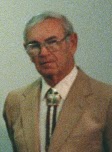
Glenn Dennis
He also attacks the “missing nurse” story told by Glenn Dennis. The problem here, as it is with these other tales he uses is that the Dennis story is bogus as well. There is no missing nurse, information which was available in 1997 but McAndrew failed to find. Wouldn’t a stronger case be made by pointing this out rather than going off on the tangent that he does?

Maybe the most egregious error by McAndrew (and I’m being a bit generous here) is the illustration on page 6 that shows a long Mogul array. Although he suggests that the illustration is similar to the one found by Mack Brazel, it is actually from Mogul Flight No. 2 which had a configuration different than those used in New Mexico. He says nothing about that which is misleading at best.

What is given here is a report used to explain away the tales of bodies by suggesting government experiments in the 1950s. Had McAndrew done his homework, had he investigated all this rather than just read a bunch of books and official documents, he actually could have made a much stronger case. As it is, his argument fails because he used bogus information to support it.


Before anyone feels the need to point out that this sword cuts both ways, let me note that while Phil Klass and Karl Pflock rejected Ragsdale and Kaufmann, they did so only because they did not believe that anything alien fell near Roswell. They were right for the wrong reason, but it was those of us on the other side of the fence that worked to expose these people when we learned the truth. It would have been better had we known the truth before we promoted their tales and it took us a while to get to that point, but we did arrive at it… I have seen nothing from McAndrew acknowledging that his book was based on that same false information.

Saturday, May 02, 2015

Glenn Dennis Has Died

According to Albuquerque television station KOB-TV, Glenn Dennis died on Tuesday, April 28, 2015. He was the last of the three founding members of the International UFO Museum and Research Center in Roswell, New Mexico.

Dennis told researchers in 1989 that while he worked at Ballard’s Funeral Home in Roswell, he was called by an officer at the base who asked if they had any small, children-sized caskets. Later he said he was at the base while the recovery of the alien craft and the bodies of those killed had been brought in. In the back of an ambulance, he saw some strange metallic debris.

He told several researchers that he was friends with a nurse who told him about the alien bodies and the preliminary autopsy that had been preformed there. In later years his story would be challenged but he did not waver from the details.

In the early 1990s, with Walter Haut and Max Littell, a real estate salesman, they formed the museum. Dennis could often be found there and would sit down to tell his story to those who asked.


In the last few years Dennis’ health had deteriorated and he spent less time at the museum. He had been very ill for some time and died this week.

Sunday, March 15, 2015

The Great Roswell Hoaxes


The Roswell UFO crash case seems to be a lightning rod for all sorts of hoaxes, many of which have gained international attention. They began almost from the moment that we all learned that something had fallen near Roswell that certainly wasn’t a standard weather balloon. After the publication of The Roswell Incident Bill Moore complained that he had taken the investigation as far as he could and told several people that he was thinking of creating a “Roswell” type document in an attempt to convince the reluctant witnesses to talk. The blueprint for this document and the story of it was laid out in a novel Moore wrote with Bob Pratt that was called Majik. Later the first of the MJ-12 papers ended up in the hands of Moore’s pal Jaime Shandera. When the MJ-12 documents were announced, Pratt thought it was time to “dust off” the novel in an attempt to find a publisher. Apparently Moore wasn’t interested in that idea and that never happened.

We’ve gone over the problems with these mysterious documents time and again, from the lack of provenance to the false information included in them. Except for a few hardcore believers, they are all generally considered to be bogus, from the Eisenhower Briefing Document to the Cutler/Twining memo. Rather than deal with the problems they prefer to debate the issue which is not the best investigative tactic. Nearly everyone believes that the thousands of the pages that have appeared in the last couple of decades are faked by those taking real historic documents and retyping them to insert a clue or two about MJ-12. To this day no one has ever found through FOIA or extensive searches through archival material a single reference to MJ-12 that is not tainted by controversy.

The lone exception seems to be the Cutler/Twining memo, but even the MJ-12 advocates admit that the document was planted in the National Archives. Although we have heard for years that they are very strict at the National Archives checking briefcases and note pads to prevent theft. It is far easier to sneak a single sheet in than it is to take anything out. They also believe the Cutler/Twining is disinformation while I think it is just an extension of the original hoax.

About a decade after this all broke, there was the Alien Autopsy. Here was a case with film of the Roswell events, at least according to the original statements. More than two hours of film was available, according to the first “rumors” and that included footage of President Truman walking the crash site. It was said that the photographer had been left holding all this footage because of some sort of an error in 1947. No one ever asked him for the film so he eventually sold it to a record promoter in England. Those of us with military experience dealing with classified material found the story somewhat implausible. We were told that the cameraman’s name was being withheld because he feared retribution by the government. Of course, had his story been true, those with the proper clearances would have found it simple to learn who he was… and charge him with income tax evasion for failing to disclose the alleged $100,000 he was paid for it.

Of course, it is never a good idea to promote the reality of one controversial claim with another. At one point they were using the MJ-12 documents to underscore the reality of the film. They also showed photographs of the film canisters with the classified markings visible. When it was pointed out that these markings resembled nothing that has ever been used by the US military, those photographs disappeared.

Over time, the claims changed. There weren’t two hours of film; there were some twenty minutes of it. Some of the footage, taken in a tent supposedly erected on the scene for preliminary autopsy was so dark that little could be seen and so bad it couldn’t be used. We were told that they had attempted to reproduce that footage but it was still too dark to use (and here I think of all the documents that Bill Moore retyped because the originals were too blurry to be easily read). Those owning the film were admitting to faking some of it but the other footage, the actual autopsy, filmed in black and white in a room that was brightly lit, was the real thing.

There were problems with this since military autopsies, even in 1947, were filmed in color. There was no one recognizable in the film. There was nothing to suggest where it was taken and more importantly, it seemed that those conducting the autopsy seemed to be a little too cavalier in it. They were not making the sort of record you would expect, especially when you consider this would be a unique biological sample. They were sort of hacking away at the body without the still photographs that you would expect.

All this speculation and wasted time ended when those who had created the alien autopsy came forward and admitted the hoax. Interestingly, this is not good enough for some. They continue to believe that the autopsy is real. I do not understand this reasoning given those who originated it said it was a hoax and provided pictures to prove it. I believe that the discussion should have ended at that point rather than a useless debate on why they were lying about faking the film.

During the 1997 Roswell anniversary, we heard about a piece of debris that had a proper chain of custody, had a provenance, and that the name of the man who had picked it up on the field would be revealed at a special presentation. Because this would be physical evidence that could be taken into a lab and tested, and because it had been taken into a lab for analysis by a scientist who would present his findings, the presentation was well attended. This was the smoking gun that proved the Roswell crash was of an alien craft. 

The scientist, Dr. Russell VernonClark who had conducted the analysis, was slipped into Roswell for the presentation and nothing else. If this was an artifact from another planet, as VernonClark claimed, then this was certainly big news. Certainly the biggest at that festival.

VernonClark, during his presentation said, “The atomic mass so differs from that found in known earthly elements, that it is impossible for it to be from Earth.”

That would mean, of course, that it was of extraterrestrial manufacture. It would mean that an alien race had visited Earth and the evidence they left behind was now in the hands of investigators and scientists. VernonClark did not equivocate. He was definite about the meaning of his findings. There is nowhere on Earth that this piece of metal could have been found. It had to come from another world.

Finished with the presentation, he sneaked out the back door and then fled from Roswell in the way that he had arrived. Some say he ran out the back door to a waiting car to get him out of town before anyone could be ask any pointed questions such as who had found the metal and how had it made it into his hands.

There was no back up for the testing presented, although it was alleged that such additional and independent testing had taken place. There was no corroboration for the analysis or the conclusions that had been drawn. It was claimed it had been done but no one involved would say by whom or where or even present the independent lab work.

Other scientists, when contacted by reporters, said that the isotopic ratios described by VernonClark, while not natural, could be produced in any university laboratory. In other words, the artifact didn’t necessarily have to be alien. It could have been manufactured on Earth and in fact that wasn’t all that difficult given the proper lab facilities.

In an article published by the Albuquerque Journal, reporter John Fleck quoted a number of scientists including University of Kentucky chemist Rob Toreki who said, “You can do it here.”

He meant that you could manipulate the isotopic ratios. And VernonClark eventually said the same thing when asked about that. In a telephone conversation with me, he said it could be done so that the isotopic ratios, while not naturally occurring, could be produced in a lab. He added that it was an expensive proposition which is hardly the point. But he also suggested he had been bullied into the presentation. The whole thing was turning into a big mess.

Most importantly, there is no follow up on this. I was in the auditorium when VernonClark made his announcement and I saw the reporters’ reactions. They were very interested in what he had to say, especially when they were promised the information to confirm the chain of custody and the results of additional, independent testing. But none of that ever happened and I saw the reporters’ reaction to that as well. If you are going to make an extraordinary claim, then you had better be prepared to provide the confirming evidence. And when you withhold that and other scientists do not agree with the conclusions you put forward, then you have lost your audience. Yes, the reporters were very interested until they could not corroborate anything about the artifact.

All of this seems to suggest why the news media ignores the newest of the UFO reports out of New Mexico. In the 1980s they were told that there were documents that proved the case and reported this only to learn that the documents were a hoax. In the mid-1990s they were told there was film footage of an autopsy of alien creatures only to have it admitted to be a hoax. The late 1990s they were told that there was metal that couldn’t have been made on Earth picked up on the fields near Roswell only to discover that the metal could have been manufactured on Earth and that none of the supporting evidence was available.

We could always add the alleged witnesses to all these events who were not candid in their tales. Frank Kaufmann sounded good and spun an interesting tale but in the end, he had seen nothing and knew nothing. Gerald Anderson seemed to corroborate the Barney Barnett story but Anderson forged documents and lied about aspects of his tale. Glenn Dennis’ tale of the missing nurse collapsed when no nurse by the name he provided could be found. He then blamed others for that failed corroboration. In other words, there have been many failed claims about the Roswell case which would cause anyone to wonder about all the other information reported. Only those with all the time necessary to unravel all the various threads could be expected to understand the nuances of the case and no reporter (and very few of the rest of the population) could be expected to invest the necessary time to learn the truth. And even if they did, there are various “truths” to be learned out there.

I mention this only to suggest that the less than enthusiastic response by the media and many others is caused by this long and tainted history. I could suggest that it was all part of the strategy to kept the Roswell case hidden, but the truth seems to be that all the competing voices, all the opportunists, all those with their own agendas have complicated the case to the point where it might never be unraveled.

As I look over this, I wonder if anyone else has seen the relation to some of the things going on in the world today. Promises are being made but if the information circulating now is accurate, then the same problems are going to pop up again. But given the history of the Roswell case it is going to be a tough sell for the newest of the revelations especially in light of this history.

Sunday, November 30, 2014

The Roswell Slides and Premature Disclosure


There are times when premature disclosure can ruin an investigation and close avenues of research. Back in the last century (which is a line that cracks me up for some reason) Gerald Anderson burst on the scene with his tale of seeing the crashed saucer over on the Plains of San Agustin. Contrary to popular belief, I was the first to talk to him and found his tale interesting but in conflict with the information that Don Schmitt and I were developing. We didn’t understand how the Barney Barnett tale fit into the whole Roswell picture, especially if Anderson’s date and location were accurate. Anderson seemed to be corroboration of the Barnett story and it was from an alleged first-hand source.

Anderson told me that he could identify the archaeologists that Barnett had mentioned, said they were from the University of Pennsylvania, and the leader was a guy named Adrian Buskirk. Tom Carey, who had studied anthropology as both an undergraduate and graduate student, took on the search for Buskirk and found a guy named Winfred Buskirk, and given the identikit sketch of Buskirk provided by Anderson, looked like it was the right guy. But Buskirk denied that he had been involved and during the summer of 1947 was in Arizona working with the western Apache and on his dissertation.

The question became if Buskirk wasn’t on the Plains of San Agustin to have seen the crashed saucer, then how would Anderson know about him. Buskirk, who had taught high school anthropology in Albuquerque was as confused as the rest of us. He solved the problem by calling friends at the Albuquerque High School who looked at the records there. According to what they told Buskirk, Anderson had taken his anthropology class. Buskirk told me this and provided the names of three contacts at the school if I wanted to verify the information. This I did, and in fact, the man on the phone told me that he was looking at the transcript as we spoke. Anderson had taken Burkirk’s anthropology class. We had put the two of them together in the same class room at the same time.

I called Fred Whiting at the Fund for UFO Research and told him what I had discovered. Whiting, in turn, called Stan Friedman, who called Anderson. Anderson then called the school and threatened them with a lawsuit if they disclosed anything about his academic record. Anderson then sent me a letter with the same threats, but in the course of that, verified some of the information I had received. Anderson insisted he had not taken Buskirk’s class but had taken sociology instead.

The upshot of this was no one else would be able to verify the information. Had I not told Whiting and set that chain in motion, better evidence could have been obtained and Anderson’s tale would have been rejected much sooner than it was. I can now mention all this because those who helped me are not in danger of losing their jobs. Yes, I have documentation to back this up, including letters from Buskirk confirming this.

That was premature disclosure.

So, how does this relate to the Roswell slides?

In much the same way.

I first learned of the slides, not from my research partners, but through Rich Reynolds’ UFO Iconoclasts blog. He mentioned the information came from Nick Redfern. While I didn’t believe most of what Rich had published about the slides, especially about some sort of nondisclosure agreement, I emailed Nick about it. Nick suggested that I call him, so I did.

At that point he confirmed what Rich had published. Or, at least, it was what he had been told, including the names of some of those involved. I next checked with my research partners and learned that the information Rich had published was accurate. I just hadn’t been in the loop.

At that point, I suspended work on the slides because others were involved and that nondisclosure agreement bothered me. As much as I wanted to publish here what I knew, I also suspected that the man who owned the slides would think that they had told me. If the man with the slides wanted nondisclosure agreements, it meant that he was serious about this, and if I entered into the investigation uninvited, then he could invoke the agreements. The investigation would end there.

I had learned the name of the man, not from either Don or Tom. I had just enough information about him that it took me about three minutes to find an active telephone number for him. I’m not sure why I bothered with that because I had no intention of calling him. If I did that, he could take his slides and go home. The investigation would have been ended. To me, the end result, that is verifying the provenance of the slides and securing as much data about them as possible was the most important aspect of it. I could stand aside and let the investigation go.

Sure, I had ideas. When I was told that the coding on the edge of the slide film proved that it had been manufactured in 1947, I asked if they knew that the codes were recycled every twenty years, which meant the film could have been manufactured in 1927 or 1967 rather than 1947. I believed that the chemical composition of the film and a proper analysis of the chemicals used in developing the film might be important in dating the film. I wasn’t told if this was being done but have since learned, as has everyone else, that a Kodak official has verified the date… and no, I don’t know how that verification was done. If it is based solely on the dating code, then that doesn’t do much for us.

I didn’t want to wreck the investigation of what could be some of the most important evidence of the Roswell case just so that I could know everything that was going on immediately. I put my trust in Tom who had put his trust in Don. Or, in other words, I believed that when the time came, I would eventually have the information necessary.

The problem for me was that others were being brought in. Tom and Don got permission to ask questions of others but I was left out of the loop. In conversations and emails with various people, I learned a little more, but never anything that wasn’t already out in the UFO community… I suppose a more accurate way was to point out that I was getting corroboration of what I knew as opposed as getting anything from them. I wasn’t actively looking for the information but was getting it as a by-product of other work.

The real point is that there wasn’t much for me to do in the investigation. I made suggestions about what should be done, I harped on the provenance, and on chemical analysis as a way of dating the slides, but I wasn’t being told anything specific… Oh, I wanted to publish but knew that could destroy the working relationship between the source and Tom and Don.

Just over a year ago, this whole thing had a minor detonation. Information got out and people asked me about it. I felt the information was proprietary. Some of the things I knew, I didn’t think should be shared widely because I believed that could damage the work being done. I answered questions by saying that I was not part of the investigation, which was true. I used that to dodge the question so that I didn’t have to lie about it. I wasn’t involved in the investigation and had done no real work beyond the preliminaries when the information first surfaced but that was what everyone else already knew. It wasn’t the exact truth, the whole truth and nothing but the truth, but it wasn’t false either. Some took offense at that, the very thing I had attempted to avoid. My statements were misinterpreted and twisted and not what I had said, but that happens quite a bit in the world of the Internet and all too often in the world of the UFO.

The leaks in this weren’t coming from Tom and Don. Nick had learned of all this from a source in Midland, Texas, but it was never clear to me how that source learned about this. Nick had told me, so long ago, that the slides were discovered in a box of slides as a woman was cleaning out a house after the owner had died. The slides were taped to the underside of the top of a box and didn’t seem to be part of the slides filed in the rest of the box. The other slides were of the same era, meaning 1947, which suggested a date, but certainly wasn’t evidence of it.

The name of the woman who had cleaned the house and the name of the now deceased owner were known, but that still didn’t tell anyone who had taken the slides or how they had gotten into that box. There was speculation about who had taken them, but, at that time, no one knew for certain. And there was no way to connect them to Roswell, other than there just couldn’t be that many UFO crashes. It was deduced that they were from Roswell.

As we know from what Tom has said lately the slides were dated as 1947 and that a historian at Kodak verified that. Tom’s specific words were, “It’s 1947 stock. From the emulsions on the image, it’s not something that’s been photo-shopped like today. It’s original 1947 images and it shows an alien who’s been partially dissected lying in a case.”

I can dissect that statement but I wasn’t in the room to ask the specific questions which means that someone probably didn’t ask them. I would have asked had there been a chemical analysis done, which might have provided an accurate date. It is a question that will come up. Yes, the image on the slides is a real image, but that doesn’t mean it was a real alien. I know that the slide holder was from the proper time frame and I know the code could be from 1947 but the code is not definitive.

Tom also said that the creature is “three and a half to four feet tall, the head is almost insect-like. The head has been severed and there’s a partial autopsy. The innards have been removed, and we believe the cadaver has been embalmed, at least at the time this picture was taken."

A question that comes to my mind is how does this affect the Glenn Dennis story. The illustrations that he supplied of what the alien supposed looked like is not insectoid. They more closely resembled the heads described by Betty Hill at one point and the arms and hands look like the Martians from the 1953 War of the Worlds. Does this mean that they now reject the Glenn Dennis testimony? Oh, it wasn’t that strong in the first place because the descriptions he offered were second hand at best.

There is an indication that they have a witness who is over 90 years old who said that the creature on the slides looks like the creatures he saw. Given what I know about Tom, I’m sure that he has verified that this unnamed source was assigned to the base at Roswell in 1947 (or to one of the other commands in the proper time frame) so that he could have seen the creatures recovered there. That would tend to tie the slides to Roswell but that still doesn’t tell us who took them and how they ended up in Midland, Texas.

There are a couple of other points. In the pictures, the alien’s midsection is obscured by a hand lettered sign that could provide some information. Unfortunately it is turned at a sharp angle to the camera so that it can’t be read. Yes, there have been attempts to read it, but it is more obscured than the Ramey Memo.

At the moment, from what I know, there doesn’t seem to be an answer to the question of who took the slides. There is speculation, and even if that speculation is accurate, the man can’t be interviewed because he is long dead. That, I think is going to be a stumbling block.

I will say, however, that this isn’t really an investigation in the scientific arena. Areas of science can be used such as the chemical analysis of the slide stock and the chemicals used to develop the film, but this is actually an historical investigation. Given what is in the hands of Tom and Don, history is a more appropriate arena. The case needs to be put together as historical research with a dash of documentary evidence thrown in and a little bit of scientific analysis.

But the real point here is that premature disclosure could have wrecked the investigation and there wouldn’t be any controversy if some of the information hadn’t leaked too early. That information didn’t come from Tom or Don and I don’t believe they had any reason to disclose what they knew in the very beginning. They had made no public claims about the slides and while there were those who wished to know more, neither Tom nor Don had an obligation to supply that information. In fact there could be legal ramifications if they did.

That situation has changed with the information released at the press conference. Tom announced officially that they had the slides and that some research had been done. Once he did that, then questions that have been asked for the last two years should have been answered. No evidence was offered… it was sort of a presumption of evidence to come. It was “Here is what we have and we will let you know about it soon.”

Tom said that everything would be revealed after the first of the year, but the trouble with that is that he was sitting at the table telling the story now. If he was not prepared to share the evidence, then he shouldn’t have been talking about this in the way he was at the forum where he was. The issue of premature disclosure was over… he had ended it with the announcement.

Oh, I’m willing to wait a few more weeks for the detailed information but if he, and Don, were not prepared to provide it, they should have waited. After all the turmoil over the last eighteen to twenty months, that was what should have been done… But, of course, that wasn’t my call, I had no hand in making the decision, and have no inside information contrary to what some believe.


Monday, January 10, 2011

Glenn Dennis Revisited

A bit of a preface about all this. Several years ago I decided that I would like to be invited to speak at more UFO conventions. I knew the problem was that I held some views that were not universally accepted in the UFO community. I thought that if I had only a skeptical argument I would not say anything about a case. I would promote only those that I believed had some legitimacy.

But I just couldn’t embrace some of the more ridiculous notions in the world of UFOs. The real breaking point came when I listened to Robert Willingham on Jeff Rense’s radio program. Based on what I learned, I knew that Willingham had not been an Air Force colonel. He was not a decorated veteran of World War II or Korea and had not been a fighter pilot. His claims of this military service outraged me. I could not, in good conscience, remain silent when I knew that there was absolutely no evidence that Willingham had served in the Air Force and that his story of a UFO crash was not true.

I had, in the past, suggested that I did not accept the tale told by Glenn Dennis. There were just too many problems in it, the most obvious was the lack of supporting testimony from those who were there, in Roswell, in 1947.

As I said in the last post, the question arose about how I learned Glenn Dennis’ name and that I answered. Walter Haut told me. From there we, and by we I mean Don Schmitt and I began our investigation into the Dennis story. Later others would contribute to our knowledge including Victor Golubic who at the time lived in Arizona and Ted Oliphant who, at the time, was a police officer in Alabama.

When I first met Dennis, in November, 1990, he told the story that he pretty much sticks to today. There have been modifications to it but those have come about because the information we, and when I say we I mean a number of different researchers, had provided.

According to Dennis, he was working at the Ballard Funeral Home in Roswell when he received a number of telephone calls from the base mortuary officer. He was asking questions about caskets, if they could be hermetically sealed and if he had any small ones in stock. He answered the questions but said that he didn’t have enough of the small caskets.

Later, because the mortuary also ran the ambulance service, not that uncommon in small towns in the 1940s, Dennis ran a slightly injured soldier out to the base. While at the base hospital, he saw a number of military ambulances parked there with their back doors opened. Inside he saw metallic wreckage, again not uncommon if there had been some kind of aircraft accident.

He said inside that ambulance he saw a canoe-shaped object. Not the whole canoe, but just the bow of it. He said that there were some symbols on it but he never really described these for me.
Inside the hospital he saw they were unusually busy, which might have been accounted for by an aircraft accident. He thought he would look up a nurse he knew to learn what happened and maybe buy a Coke before he returned to the mortuary.

The nurse saw him first, in one of the hallways and told him to get out of there before he got himself into some kind of trouble. Before he could react, an officer that he described as having red hair and a nasty attitude caught him and asked him what he was doing in the hospital. The officer was accompanied by a black NCO, whose attitude was equally bad.

According to what Dennis said to me, and said to others, he was told there had been no aircraft accident, there had been nothing going on, and that he should get back to the city as quickly as he could. He would tell no one what he had seen, or thought he had seen, and if he ever mentioned anything about it, they would be picking his bones out of the sand.

He also mentioned that some of the threats came from the black NCO. This has always bothered me given the timing of these events. Yes, there were black NCOs in the Army and there were twenty-five or twenty-six assigned to the base at the time. However, it seems that neither the red-haired officer nor the black NCO were assigned there. They had come into Roswell from some other location.

But this was 1947 and I wondered about a black NCO threatening a white civilian. True, the officer had made the initial threats but given the era, given the racial divide in 1947, would a black NCO felt secure enough to threaten a civilian?

At any rate, Dennis left the base puzzled by all the activity and the security that was being maintained. It confused him, but a day or so later, he said that he had spoken to the nurse he knew. He had met her at the officers club and she had more to say. According to him, she told him that she had been involved in a preliminary autopsy of little creatures. She was sure that they were not from Earth and she told him not to tell anyone what about the events.

I will point out here because it does impact on the validity of his tale, that in the initial interviews, Dennis suggested that there was a romantic interest. He and the nurse had a relation that might have developed into something more permanent. This would explain why she felt she could tell Dennis about an activity that was classified even though she would have been ordered not to talk to anyone who was not cleared to know it.

Within days she was transferred from the base, apparently sent to England. Dennis said that he received one note from her, giving him her address in England. The letter he wrote came back marked, "deceased". She had been killed in an aircraft accident, according to what he was told by other nurses at the base.

This also suggests a relation that was more than casual. That she would write to him while enroute to England suggests a rather strong relation. If such a relation didn’t exist, then there would be no reason for her to communicate with Dennis so quickly.

All this kind of information gave us a witness to the bodies and testimony that those bodies were not human. It gave us information about transfers from the base, and it was a story that ended in tragedy. It would make great television, and we were in Roswell to make a documentary about the crash when I first talked to Dennis.

But this story also provided me with a lot of information I could check. There were components of it that would have been reported in other arenas and all I had to do was find the right information sources.

Yes, Dennis was reluctant to give us the name of the nurse. He said that he had promised her that he would never reveal what she said or who she was. But then she had been dead for decades and was beyond Army regulations and Army punishment for revealing classified information. There was no reason to keep this secret.

He did supply me with a name, with the promise that I would not tell anyone who it was. Naomi Self was the name of the nurse, and I have no trouble revealing it now because Dennis apparently shared that name with many others who released it. Even Philip Klass, in one of his SUN newsletters, gave the name as Naomi Maria Selff, a variation that Dennis had apparently given to Karl Pflock at some point.

Of course I checked the Yearbook that Walter Haut had produced in 1947 that gave us so many names. She wasn’t in it. But then many who had been at the base in 1947 were not listed.

She was not in the base telephone directory which held the names and base telephone numbers for many of the officers. Of course, as a nurse, her name might not appear in that book either.

I had noticed that the Roswell Daily Record, on the front page, nearly everyday, welcomed newly assigned soldiers and officers to Roswell. Her name didn’t surface there either... though I wondered if they would have printed the name of a young, single woman, again given the time frame.

I checked the New York Times Index, which, in the pre-computer age, was a great tool. I could look up aircraft accidents and found them broken down by date, type of aircraft, location, and when and where it had appeared in the newspaper. I searched everything from July 1947 through 1955 and found no aircraft accidents in England, Europe or the United States that had claimed the lives of five Army nurses as Dennis had said.

Don Berliner, who was conducting his own research along similar lines, searched the Stars and Stripes. This is a newspaper printed for the military overseas. Had such a tragedy occurred, then that information would have been published in it. He found nothing.

Not that this proved anything. The Army, in an attempt to stop people from searching for her, put out the rumor that she had been killed. It explained why she had never written to him again. The details he had could be wrong and that was why we could find nothing about it.

There was one source of information that we hadn’t tried and that was the Morning Reports. In the Army, at that time, each unit produced a report of the number of people available for duty that day. Those reporting into a unit were listed by name and serial number. Those sick in the hospital were listed by name and serial number. Those on leave, those on temporary duty and those transferred were listed by name and serial number. And all those morning reports were housed in the big National Archives center in St. Louis. All you had to do was write to them and ask for what you wanted.

Which, of course, I did. And in return I got the Morning Reports, not for the medical staff, but instead for the Headquarters Company. I went back to them a couple of times and was told that the Morning Reports for that particular unit were no where to be found.

You might think that the missing Morning Reports suggest a conspiracy to hide the information and keep us from verifying that the nurse had been stationed in Roswell. A researcher, Vic Golubic, wanted to pursue this. He called the Records Center and talked to several people there. Eventually they located the Morning Reports for the unit.

The critical dates, July and August, were available. Since Self or Selff had apparently been transferred not long after the UFO crash, her name should have been in the Morning Reports in July or August, but it was not. But Golubic had requested the Morning Reports for the whole year of 1947 and much of 1946, so that he had the names of many of the nurses, but no Naomi Maria Selff or Naomi Self or anything that sort of matched.

Golubic would work the problem many different ways according to what he told me, chasing doctors who might have known nurses, civilian agencies in Roswell that would have employed nurses, and even going to the Army which had records of nurses and nursing students that went back into the early 1940s including those from the Cadet Nurse Corps Identification Cards that listed some 124,064 names. He was unable to find any variation of Self’s name in any of these locations.

I worked with a police officer, Ted Oliphant, and we searched throughout the United States attempting to find her. Eventually we would find four women named Naomi Self (yes, it is some what rare name, and we found four), but none was the right one.

I also used one of the CD-ROM telephone directories containing millions of names but couldn’t find her. I tried variations, including those provided by Dennis and still had no luck. And yes, I realize that she might have gotten married and that her married name would probably be different than her maiden name. Still, we could find no trace of her.

Golubic confronted Dennis about this, saying that he could find no record that a nurse with that name even existed. According to what he told me, Dennis said that he had not given any of us the correct name because he had promised to protect her identity. He hinted to Golubic that her last name did begin with an "S" and there was some speculation that it might have been Sipes.

Golubic, like many of us, thought this was just a dodge because we had proved a negative. No record of her in any of the places that it should have been had been found, and when that information was presented, Dennis changed it. That meant we would have to begin all over again.

But I didn’t believe that Dennis had not given us the real name in the beginning. I don’t know why he picked the name he did, but I don’t think he was doing it to protect the nurse. I think he believed we wouldn’t have the resources to track this, and I don’t think he realized the level of documentation existed in the 1940s that did.

I had talked to him once and he said that he couldn’t understand why we couldn’t find his nurse because he had given us the name. He stressed that he had reluctantly shared the real name with us in the hopes of our finding her, or what had really happened to her. Why couldn’t we learn anything?

I pointed out that people have the same name and I had talked, that morning, with a Robert Slusher who had been in the Army during World War II. I was looking for a Robert Slusher who had been with the 509th in Roswell in 1947. The guy I talked to was not the right man.

Dennis then said to me, "Oh, I know Bob Slusher. He lives over in Alamogordo."

When I talked to that Slusher, I learned it was the right man. But the point here is that Dennis was pushing the name, telling us that he had given us the right name and we couldn’t find his nurse. When we said there was no nurse by that name, Dennis changed his story and his nurse’s name.

Given all that, I wasn’t a fan of Dennis. I also learned that he hadn’t been a mortician in 1947 but an embalmer. A slight embellishment and maybe not one of overriding importance. Skeptics would, of course, use this to hammer him if they had known it.

There were other minor alterations in his story but these seemed to be more of the problems with memory than an attempt to deceive. For example, he took us to what had once been the base hospital and laid out the scene for us. He pointed to where the ambulances had been parked, what door he had entered, and what loading area had been used by the military for the bodies (as seen in this picture). The problem here was that the hospital as it stood then, in 1990s was not the hospital in 1947. In 1947, the hospital was comprised of a number of separate buildings, each with it’s own function (as seen below). When I was there in 1990s, a single building had replaced all those others.

It would seem to me that Dennis, if he was telling us the truth, would have known that. It would seem that he would have said that this doesn’t look quite right but there had been no hesitation by him when he was describing the scene to me. This suggests an invented tale rather than a lapse of memory.

Is this another big blunder, or is it just a faulty memory that was fifty years in the making? Given the name trouble, maybe it was just more of the invented tale.

In fact, at one point he was telling people that we all had pressed him for a name, meaning that we UFO investigators had wanted the name. He said that he told us he’d give us a name but that it wouldn’t be the right name. We just hadn’t listened to him when he cautioned us. This was, of course, an attempt to blame UFO researchers for the Naomi Self name. That should have annoyed all of us, but apparently I was about the only one who thought this to be outrageous.

I can take this a step further, which I believe to be important. Dennis had told Karl Pflock that his, Dennis’ nurse, had told him that the autopsies had been performed by two doctors who came in from Walter Reed. That caused researchers to ask why they would have called Dennis about embalming the bodies as he had claimed. Dennis again said that he had been misquoted. The trouble was that he was on video tape saying that his nurse told him that the pathologists would have to do something when they got back to Walter Reed. He hadn’t been misquoted.

There is one other point that should be made and that is that in 1947, according to the City Directory, Dennis was married. His wife’s name was Dorothy. So, why would the nurse have been involved in a romantic situation with Dennis, especially when he described her as a good Catholic girl?

The big problem was the shifting nature of the nurse story and her name. And then his attempts to blame us, meaning the researchers for those changes. But that isn’t the way it was at all. Had he told me that he would give me a name, but it wouldn’t be right, I would have told him to save it. No, what he told me was that he had promised her he wouldn’t tell anything and that I had to promise not to reveal her name. I held onto that promise until it seemed that everyone, Roswell researcher, UFO researcher, UFO skeptic and debunker, and tourist had been given the name.

There was another the thing that bothered me the most about Dennis’s story. He had been unable to provide documentation that he had once promised. And, that the story might not really be his, but was that of another employee at Ballard’s who had received the telephone calls and the inquiries. But that man had died before Dennis entered the arena, which meant the core of the story was true, but Dennis had not been the man in the middle of it.

What I had been told, by some, was that the mortician who received the telephone calls was not Dennis, but another man. That man would later tell Dennis about this and Dennis adopted it as his own story.

While my disappointment hinged on the failed attempts to find his nurse and the changing of her name, there were others who were still looking for Naomi Marie Selff, as the name had evolved. A group calling itself News of the Force (NOTF) said they had contacted three officers at the Pentagon who searched the records available there for Selff but found nothing. One officer said that he found nothing about her in the archives of the Women’s Memorial at Arlington.

But as I say repeatedly, nothing is ever simple in UFO research. NOFT claimed to have found a web site of military records and in their search turned up two women named Naomi Marie Self. One of the entries suggested one of the women was about 87 and the other suggested was 101. However, not long after NOTF found the records they disappeared from the Internet... which means that I can’t verify the information.

NOTF had also initiated some Freedom of Information requests to the Air Force Personnel Center at Randolph Air Force Base in Texas. According to them, the reply said, "The Air Force Worldwide Locator searched all available Air Force and Civil Service file computerized indexes (sic) and based on the information you provided did not find any record of ‘Naomi M. Self’ ever having served with the U.S. Air force under that name. AFPC searched all records contained in the Defense Eligibility Enrollment Reporting System (known as DEERS to all of us who have served and retired) database and the National Archives Records Administration (NARA) database, the Automated Records Management System (ARMS) database and the Military Personnel data Systems (MILPDS)... There were no identifiable responses for that name."

I’m afraid they wasted their effort, other than proving, once again that Naomi Self was not the right name and I wonder if these databases were user friendly. Would they have kicked out a name if it had a single F on the end? And, what if Naomi Sipes was the right name? It probably wouldn’t have kicked that out.

Sure, I’ve read some of the supporting statements for Dennis. Tom Carey and Don Schmitt, in their book, Witness to Roswell, reported on a number of people who claimed to have heard the little bodies, little coffin story from Dennis.

Former Roswell police chief L. M. Hall in his 1993 affidavit for the Fund for UFO Search said that he remembered Dennis telling him only a few days after the newspaper stories that he had received telephone calls asking about the small coffins. Hall claimed that Dennis said they wanted "to bury [or ship] those aliens." Hall said that he thought it was some kind of a joke. But this isn’t documentation. It is hearsay.

Besides, there really is nothing in Hall’s statement to anchor this recollection in time. Yes, he says that it was just days after the events in the newspaper, but this might be where he is confused. I can’t think of a reason this should stick in his memory, nor can I think of a reason that it has to be 1947. Hall, here, I believe is, confused.

Carey and Schmitt found Roswell attorney Richard L. Bean who said that he heard the tale of the telephone calls within days of the crash, but it was a couple of years before he heard Dennis talking about it which doesn’t do us much real good either. The couple of years could be something more and again, this doesn’t anchor the event for us.

Most important, none of this information was reported before the explosion of the Roswell case. There is nothing to support the idea that Dennis had been telling this story since 1947 to selected friends.

There doesn’t seem to be any written documentation that transcends the publication of The Roswell Incident. Dennis’ story emerges in 1989 and has since undergone a number of evolutions. I have tracked the story from the beginning and haven’t seen any reason to alter my earlier opinion that there are some real problems with it, not the least of which is the changing name of the nurse.

Once again, I’m at odds with those in the UFO field. Most accept Dennis’ story as legitimate, but I can’t. There are too many red flags, too many discrepancies, and too many changes to it. I have learned, over the years, that a story that changes to incorporate new information is probably not accurate.

So, rather than not say anything about this and letting others fight it out here, I figured I would tell what I knew about Dennis and his missing nurse. Without some kind of verification that does not rely simply on the memories of people who believe that Dennis said something in 1947 to them, I find no reason to accept this tale as accurate.