Showing posts with label Doc Noss. Show all posts

Wednesday, February 08, 2023

The Victorio Peak Treasure - The Final Analysis


There is no good historical evidence to suggest that any gold was ever hidden in Victorio Peak by anyone other than Doc Noss. He did, at times, attempt to sell gold to various people, but those attempts always ended with Noss trying to peddle gold-plated bricks. No sizable treasure has ever been brought out, and no one has been able to verify its existence, other than with affidavits from many who seem to be less than credible and have their own reasons for claiming to have seen the treasure.

Victorio Peak. Photo copyright by Kevin Randle


There is one point that must be made. In the 1930s, a law was passed making it illegal for private citizens to own gold bullion. There were exceptions made for jewelry and coins. Noss, however, claimed he saw precious stones and gems, not to mention silver coins, in the cave as well as all that gold. Many of these items could have been exchanged for cash that would have been sufficient to finance any of the alleged recovery operations. He could have retained the services of any attorney he wanted to protect his claim paying for it with the silver. Noss had no need for any outside investors, who would have diluted the treasure and could have tried to steal it all from him. Not to say that all the investors were of poor character.

The single piece of alleged documentation – the receipt from the Denver Mint – vanished. Noss allegedly had it in his possession, but it disappeared after he died. The Mint, as noted, denied they had any record that Doc Noss had ever visited them. There would be no motivation for the officials at the mint to lie about it, especially if there had been some sort of receipt provided to Noss.

Those supporting the idea of the treasure say that the assault on Noss’ character is a diversion and irrelevant. However, the character of the man, as seen in various records, police files and other activities is important. It suggests a man who, at times, engaged in activities that do call his character into question. Without some sort of physical evidence, without some additional proof of treasure, why should we accept the claims of that man.

Think about the situation and how you would react in a similar circumstance. Noss’ actions are more aligned with “movie thinking” than they are those in real life. Nearly every move he made is contrary to common sense, if there was the treasure he claimed to have found hidden in the mountain. Rather than seeking out legal help, with much of the treasure available to him, he could afford, instead he engaged in activities that are reminiscent of a con game. Those who saw gold in his possession recounted that it was in small amounts.

Remember, the testimony of those who had dealings with him and the suggestion that he would buy copper bricks, have them gold plated and then display them. Why bother with that duplicity. Why not display the real thing… yes, it was illegal to own gold bullion at the time, but carrying around a gold plated brick that he said was solid gold would have had the same consequences. True, he could avoid trouble by showing it to be a gold-plated copper bar, but then the specter fraudulent representation rears its ugly head. Either way, Noss would find himself in some trouble.

Given the actions of Noss, given all the changes and variations in the tale, it seems unlikely that he ever found anything. The evidence, studied under the harsh, cold light of objectivity, suggests there never was any treasure hidden in Victorio Peak.

There is one final point to be made. It is clear from the record that the Army and the officials at White Sands Missile Range have treated everyone involved in the affair with honor and respect. When Victorio Peak is finally ripped open and the caves exposed, there will be no treasure and no signs of a treasure having been hidden there because there never was one.

Coming soon, an examination of the Ogam symbols and those who have interpreted it.

Sunday, February 05, 2023

The Victoria Peak Treasure Part Five


The next assault on Victorio Peak came in 1962, when the Gaddis Mining Company, working with the Museum of New Mexico in Santa Fe, begin operations. Since it seemed to be a state sponsored research trip, one designed to recover artifacts of archaeological significance, the Army was inclined to permit access to the range and the mountain. On June 20, 1963, a license was granted to the Gaddis Mining Company for a thirty-day exploration.

Using a variety of state of the art techniques, the team tried to map the interior of the peak, searching for large void areas that would indicate caverns. They also built roads to lead to the various important sites, including one to the top of the peak. They were unable to accomplish all this in the original thirty days and an extension was granted. They dug several small test holes in depth from 18 to 175 feet deep. They also dug their own tunnel into the side of the peak, trying to gain access to the caverns, but failed.

I can’t help but draw a parallel to what has been done on Oak Island. Companies formed to search for a treasure that no one seems to have seen, except, of course Doc Noss. They had drilled test holes searching for a large void that would indicate a large, underground cavern where the treasure is hidden. And in all the digging and searching an excavating, nothing of value has been found.

The Gaddis Mining Company is reported to have spent a quarter of a million dollars in their attempts to find the treasure. Another seven thousand was requested by authorities at the missile range for reimbursement of Army funds spent in support of the activities.

As with the Fiege expedition, nothing was found that would suggest that any gold was hidden there and nothing of interest was learned in the sixty days of the Gaddis Mining Company operation. No one seemed to have worried that there was nothing detected to suggest a large stash of metal inside the mountain. If nothing else, it would seem that something would have been detected if there was as much gold and other metals hidden in Victorio Peak.

Victorio Peak looking toward the east. Photo copyright by Kevin Randle.


It was during this same period that the Department of the Army asked Ova Noss to sign a consent document allowing the Army to search. What it said was that she waived all rights to sue the Army or the government for “alleged unlawful taking and withholding of her personal property.”

Ova Noss’ attorney, Phil Koury, thought this was a bad idea for her, but she had already signed the document when he learned of it. Koury asked, “Why would the Army insist on such a waiver? It was an indirect admission that there had been unauthorized intrusion into the Noss Cavern by military personnel; so it was deemed necessary to eliminate Ova’s right to resort to litigation to recapture the gold bars.”

There is, of course, and alternative explanation that makes as much, if not more, sense. No actual proof had ever been presented that gold was stored in Victorio Peak. Only Doc Noss had ever claimed to have seen the real treasure. Only Noss had ever brought out any of the gold bars. True, Fiege had claimed to have seen the gold, but the bars were covered in dust, and he admitted that he felt sick at the time.

It would seem that the Army was attempting to guard against the real possibility that once a cavern was opened, that meaning any cavern, nothing would be found in it. Then Ova Noss would believe that the Army or the government had beaten her to the cave and “stolen” the treasure that she believed belonged to her. It would make no difference if there had ever been gold there or not. It would make no difference if the story was a myth or not. Ova Noss would file suit and the Army would be nearly defenseless to protect itself from those claims.

Ova Noss, however, was making some money on the treasure story. Various investment groups, convinced that there was a treasure hidden somewhere in Victorio Peak, would buy a portion of her rights to the treasure. They would then begin to try to force the military to allow them on the missile range to search for the gold.

In 1973, for example, a syndicate from Salt Lake City offered $150,000 for an interest in her rights. They would pay $25,000 immediately and $5,000 a month. They wanted fifty-one percent of her interest but were negotiated down to forty-nine percent.

This time there was a hint of real treasure. One of the men, identified as John Walton, according to Koury, said that he had seen twenty-two gold bars himself and it was estimated they were worth about six million dollars. This was, of course, before the price of gold exploded and in today’s mark, they would be worth many times the six million, if they existed.

Ova Noss received the $25,000 but there were never any monthly payments. Koury eventually notified Walton’s attorney that the failure to make the required payments nullified the contract. The attorney could shed no light on why the payments had not been made.

Wednesday, February 01, 2023

The Victorio Peak Treasure - Part Two

With the destruction of the original passage into the treasure vault, the gold was now just beyond Doc Noss’ reach. Oh, he knew it was there because he had seen it many times and according to him, he had carried dozens of the gold bars out to be hidden elsewhere. There are conflicting accounts, but it seems that no one else ever really saw the gold in the cave with the possible except of a couple of military men two decades later. He did show metal bars to others and in a deposition that was an outgrowth of later legal proceedings, Ova Noss would say she had seen a large number of the bars. She had not seen the gold in the cave which is a somewhat fine distinction.

About ten years after Noss claimed he found the gold, Noss said that he had traveled to Denver where there was a government mint. He thought he could sell some of the treasure but because he was vague about where he had obtained the gold, the officials in Denver confiscated it. They gave him a receipt saying that they had $90,000 in gold they had taken from him. Noss would tell family that he had the receipt in strong box, but after he died, no one could find the receipt. Ova Noss even made her way to the Denver mint but there was no record that Noss had ever been there or that the mint had confiscated any gold from him.

Some suggest this is just another example of the government covering up that they had “stolen” the gold from Noss in the 1940s. It was Noss who told the story, and it was Noss who claimed to have a receipt to prove the tale. Neither he nor his family were ever able to produce the receipt, according to Phil Koury, Ova Noss’ attorney. Koury would become a player in the tale sometime later.

Gene Ballinger, who took an interest in the story because of the proximity of Victorio Peak to where he lived, later wrote in The Courier (the Hatch, New Mexico, newspaper) that the receipt was in the possession of the Ova Noss Family Partnership, but again, they have failed to produce it. That receipt would have been valuable in proving to the Army, which now controls Victorio Peak, that the treasure really did exist. Such proof would have erased the poor relations between the Army and the Noss family and the arguments over control of the gold.

The Courier office in Hatch, NM. Photo copyright by Kevin Randle


It is interesting that the receipt story is similar to the tale of a stone tablet allegedly found deep in the excavations of the Money Pit at Oak Island. There are tales about the tablet, a translation of the strange symbols that were on it, but no photographs of the actual tablet and no real evidence that it ever existed.  Here there are claims of a receipt but there is no evidence that it existed.

There is another parallel to the Oak Island story. The Laginas, who had leading the search for treasure on Oak Island, have produced several bits and pieces that suggest a possible treasure, none of which are particularly valuable. These items hint that there is something. Noss, in a similar fashion, did produce a few artifacts hint at the treasure. These included a sword of French manufacture that dates to sometime between 1798 and 1803, two iron cross stirrups of Spanish design and thought to be unique to Lancers de Vera Cruz. It does make you wonder how he managed to retrieve these items rather than some of the gold and silver artifacts reported to be hidden in the cave.

Noss spent years attempting to gather capital to reopen the treasure cave. He showed treasure in various forms various people. In an affidavit held at the Land Office in Santa Fe, New Mexico, B. D. Lampros claimed that he visited Noss and was given a chunk of gold ore that assayed to over $5,000 in gold per ton which is extremely rich. Note, however, that it was not gold ore worth five grand, but a sample that suggested a rich vein of ore existed and when mined would produce the five thousand for each ton of material processed.

There were other affidavits about gold that suggested witnesses had seen in Noss’ possession. Some saw a bar or two, while others were shown ore. Noss apparently carried a great deal of treasure from the cave but had never been able to successfully sell any of it to finance his recovery operations. Remember too, that not all the treasure was gold, but also artifacts that could have been turned into cash without violating the laws in force at the time as mentioned earlier.

Sometime after his discovery, during the Second World War, Noss deserted Ova. Although the documentation is somehow hazy, meaning there is a question about the authenticity of it, Noss was granted a divorce from Ova in Pulaski County, Arkansas. Two years later he married Violet Lena Boles. All of this would, quite naturally, complicate the ownership of the treasure rights.

During this time, Ova Noss kept the various land applications and mining claims in force, signing and renewing them as necessary. Ova, sometimes with the help of her sons, tried to clean out the shaft that had been ruined in 1939 by Montgomery, the alleged explosives expert. They were unable to find a way back into the treasure chamber.

At the same time, apparently with no permits and therefore no legal rights, Noss was searching Victorio Peak for another entrance into the cave. He believed there had to be one simply because the entrance he had originally discovered would have made it nearly impossible to carry gold and other treasure into and therefore out of the cave. At least that seemed to be his thinking on the situation.

Charles Ryan and the Death of Doc Noss

In 1948, Noss met Charles Ryan, a Texas man involved in drilling operations and oil exploration in the Permian Basin in West Texas. Noss told Ryan about the treasure, and they worked out a deal to recover it. Ryan would buy some of the gold from Noss for $25,000 and Noss would allegedly use the money to open a new path to the gold vault. Ryan was to fly to New Mexico where the bars were hidden so they could make the exchange. Noss would produce the gold and Ryan would produce the money.

When it came time for the exchange, Noss demanded to see the money first, but Ryan said he wouldn’t show the money until Noss showed him the gold. According to the story, they drove into Hatch, to a house rented by Ryan. Several witnesses saw Noss run from the house, followed by Ryan, who had held a gun in his hand. Ryan fired one shot, apparently a warning shot and ordered Noss away from his pickup truck. Noss didn’t obey the order and Ryan, fearing Noss was going for his gun fired again. This time he aimed at Noss who was struck in the head. Noss collapsed at the front of the truck, dead.

Ryan ordered one of the witnesses to call the sheriff. When the deputies arrived, they arrested Ryan. Ryan told the sheriff it had been self-defense. Noss had threatened him, and Ryan knew that Noss had a pistol in his pickup.

During the trial, evidence was presented suggesting that Noss was a violent man. Noss had bragged that he had killed before. Because of those stories, Ryan said that he was convinced that Noss was going for his gun. Ryan fired a warning, but Noss had ignored it.

The interesting part of the trial wasn’t about the actual shooting but about Noss’ background. Ryan had financed Noss, buying him the pickup and then traveling to New Mexico to obtain the licenses and permits that Ova Noss had kept in force. Ryan had bailed Noss out of jail and paid off several bad checks that Noss had written. Altogether, Ryan had spent about five thousand dollars to help out Noss. Ryan also learned that Noss had swindled others over the years.

Ryan, called to the witness stand, told of a plan Noss had devised. He wanted to form a corporation to sell stock in a venture to recover the treasure. Ryan believed they could raise, rather quickly, about fifty thousand dollars. That would give then the money to operate but Noss suggested that he and Ryan split the money fifty-fifty rather than invest it in a recovery operation. Ryan said it was at that point he realized that Noss was crooked.

Just prior to the shooting in Hatch, Noss told Ryan that he had a chance to make nearly a quarter of a million dollars selling gold bars to a man in Arizona. To make that work, Noss needed some seed money, but Ryan refused to give it to him. Why Noss couldn’t have taken the gold bars to Arizona which meant he would need no extra money was never explained. It was after that argument, in Ryan’s rented house, that Noss ran for the truck, screaming that he would get the money from Ryan, or he would kill him. Ryan, fearing for his life and having been told tales of Noss’ violent nature, shot and killed Noss. Apparently, the jury believed him, and Ryan was acquitted.

The treasure was rarely mentioned in the trial, though it did provide clues about Noss. As mentioned, Noss had claimed to be a doctor, but he had no formal training. Searches of the records of the hospital where Noss said he had been on the staff, failed to verify the tale. Noss had written bad checks. And, he had been in and out of jail on several rather minor charges. His history was not sterling, which is not to say that the tale of the treasure is untrue. It does, however, create some doubt.

Coming up next “Ova Noss vs the U.S. Government.” 

Tuesday, January 31, 2023

The Victorio Peak Treasure

Like the treasure stories from Oak Island, the exact location of this treasure is well known. According to the legend, it is hidden deep in a cave in the San Andres Mountains north of Las Cruces, New Mexico, on what it now part of the Army’s White Sand Missile range. The exact location is in a mountain known as Victorio Peak.
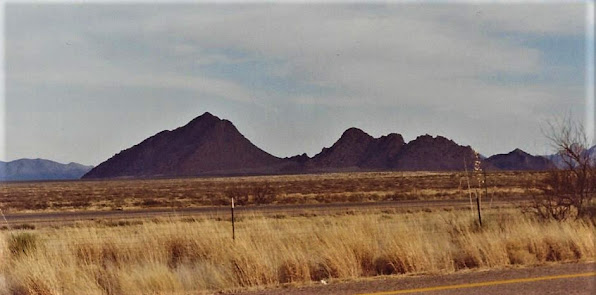
Victorio Peak. Photo copyright by Kevin Randle


There had been rumors of a large cache of gold bullion hidden in the San Andres Mountains for decades. A Jesuit priest, Father La Rue, who was working in the area around 1800, learned from a sick Spanish soldier that there was a huge vein of gold some two days from what was then Paso del Norte and now known as El Paso, Texas. Apparently, La Rue, working with the local indigenous population, set up a mining operation in the Organ Mountains, which border White Sands and are just south of Alamogordo, New Mexico, which is north of El Paso. For two years La Rue mined the gold, stockpiling it nearby.

As with most such stories there are slight variations to the myth. La Rue discovered that the Spanish were about to send soldiers to learn what happened to him. Or the story of the massive wealth that La Rue had acquired found its way back to the Spanish in Northern Mexico. Nothing stirs the fires of the Spanish conquistadors in the New World like tales of massive wealth and stacks of treasure. An armed expedition was sent north to find La Rue and what he considered his gold.

To prevent the Spanish from taking the treasure, La Rue hid all traces of his mining activity, hid the gold he had refined into crude bars in a cave and then sealed the cave’s entrance so that others would not find it. Although there was talk of his mining the Organ Mountains, it seems more likely that the mine was in the San Andres Mountains. It was here that the treasure was concealed.

Before La Rue could escape, the Spanish expedition arrived and attacked. La Rue and those with him were captured. He was tortured but refused to reveal the location of the gold. Sometime during the process, La Rue died, and with him, the exact location of the treasure was lost. All those with him were also killed without revealing the location of the gold. With La Rue dead, and without a map to the treasure, the Spanish soldiers returned to Mexico empty-handed. Although there were those who thought that a proper expedition, with the resources for a long search would produce results, no one ever returned to make that search.

Doc Noss and the Cave of Treasure

Milton Ernest “Doc” Noss, who claimed he was two-thirds Cheyenne, was born in Oklahoma and worked throughout the southwest during his life was the man who originally found La Rue’s lost treasure. Although called “Doc,” he had no medical degree and was reported to have been arrested in Texas for practicing medicine without a license. That wasn’t his only trouble with the law or the truth.

Jim Eckles, who began working for the Public Affairs office at the White Sands Missile Range, told reporter Carl Knauf, a staff writer for the Albuquerque Journal, that he had he’d dug into Noss’ background and learned “quite a bit about Doc Noss.” He had traced Noss from Oklahoma to New Mexico and said that Noss had been arrested for various crimes. Noss was not exactly the most reliable of sources.

White Sands Missile Range located near Victorio Peak. Photo
copyright by Kevin Randle


It was in 1937, Noss, and his wife, Ova (sometimes called Babe) were living in the vicinity of Hatch, New Mexico. He spent his time hunting and prospecting in the area around Victorio Peak, which was not yet part of a government reservation. During one of those hunting and prospecting trips, Noss was caught in a cold Spring shower and sought shelter under an outcropping of rock near the summit of Victorio Peak.

This was a place that had been used for centuries by other indigenous hunters, not to mention the Spanish, Mexicans and Americans. Noss saw the evidence of those earlier hunters but didn’t know if they had lived there long or were just camped there for the temporary shelter. Sitting there, waiting for the rain to stop, he noticed a stone that looked as if it had been worked in some fashion. Noss reached down but at first, couldn’t budge it. He tried digging around the edges. Given he had nothing better to do, he kept at it until he could work his fingers under it and lift it.

What he found was a shaft that descended deep into the darkness of the mountain. Now he was curious about the shaft, but it was too late in the day to do anything about it. He was not equipped for a reconnaissance. The next day, he returned with a flashlight, rope, and a canvas bag. He was unable to probe very deep into shaft, but he found enough of interest that he wanted to come back.

In a slightly different version of the story, R.L. Coker told Los Angeles Times columnist, Robin Abcarian, that he had been with Noss when he made the initial discovery. He said that he and Noss were at the top of the Victorio Peak hunting deer. Coker said that Noss knew where there was a spring that the deer would approach looking for water. Noss said that he felt a breeze that he first thought might have been a snake, but realized it was coming up from under a rock. Moving the rock aside, Noss found the entrance into the cave. Apparently, they didn’t explore it then and I must mention that Coker’s name didn’t come up in the original tale told by Noss.

In the days and weeks that followed, Noss returned to the shaft whenever possible. He did reach the bottom, but his flashlight was inadequate for the task of lighting the way once he was deep inside the mountain. Eventually, he found an underground stream but couldn’t see the other side and was initially afraid to cross it without proper preparation.

On another trip into the mountain not long after that, he did cross the stream while Ova waited for him above him. She kept herself busy making coffee and sandwiches as he searched the cave far below her. Hours later, when he emerged from the shaft, he had his canvas bag with something heavy in it. He tossed a black bar on the ground near her, but like Noss, she thought it was nothing more than lead brick.

Years later there would be another minor controversy about that bar. Ova, giving a deposition about the first entry into the cave, said that she was the one who scraped at it, discovering it was gold. Noss said that he discovered it was gold while sitting around the fire after having brought it to the surface. Although it makes no difference today who first found that it was gold, you have to wonder why he would have carried a lead brick out with him given the descriptions of the various types of treasure he had found in the cave.

Noss told Ova there were stacks of the bars in the cave eventually suggesting there might be as many as 16,000. He said that he had also found uncut gems including rubies, Spanish coins, and religious artifacts such as a gold Virgin Mary. There were other manufactured artifacts including swords. He found chests that held clothes and Wells Fargo strong boxes. He was telling Ova that he had found a huge treasure, much of it, though not all of it, gold bullion, which is an interesting point that has often been overlooked.

Noss was smart enough to know that any news about the find would fill the area with other treasure hunters, prospectors, con artists and government officials who would claim the treasure for the United States. There would also be trouble with the law. In 1937, it was illegal for a private citizen to own gold bullion. If the word got out about the gold bars, Noss might find himself in jail on federal charges. He cautioned Ova that they could tell no one about the treasure because of the real consequences.

But he didn’t bother to heed how own advice. He showed a gold bar to a friend in what is now known as Truth or Consequences, New Mexico. When asked if he had found it in the Caballos Mountains, Noss said, “That’s right.” It wasn’t long before those mountains were filled with the people Noss had feared would arrive, but he didn’t care. The Caballos were far from the true site in Victorio Peak.

Noss was convinced that he had found a huge treasure that would make him one of the richest men in America. It was difficult to get at the gold and even harder to drag it out. Some of the bars weighed eighty pounds according to the legend. Still, he, according to the tale, hauled dozens of smaller gold bars out. He hid them around the area, telling no one where these bars were stashed. He was trying to think of a way to convert the treasure into money without violating the law or alerting others to the location of the gold.

Here was the real dilemma to the Noss story. He found immense wealth that it would eclipse the fortunes of the richest men in America, according to what Noss told Ova at the time. There were coins and jewels that would be of great value to collectors, which could have been sold to those collectors without violating any federal law. There was silver bullion hidden in there as well. There were legal means of disposing of the wealth without mentioning the gold, but Noss avoided all those. He apparently never consulted with anyone who could have helped him legally, preferring to enlist the aid of outside investors. He was willing to spread the wealth around, if he could get his hands on it with their help.

He complained that one passage into the treasure cave was so narrow that he had to crawl forward carefully, his shoulders scraping on the rough stone walls. In 1939, he hired an explosives expert named Montgomery to widen the passage. Montgomery, of course, used too much explosive and collapsed the tunnel, filling it with debris. Access to the treasure room was now impossible by the original route, but who cared? Noss had already removed enough of the gold to make him wealthy, if he could just figure out a legal way to convert the gold into cash.

More coming in the next installment… “Gold Bars and Tales of Treasure.”