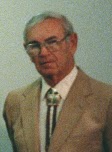
Dr. Abraham Loeb, he of Harvard and the Galileo Project, is beginning research to identify alien objects passing close to Earth that originated outside our Solar System. He is looking up, into the sky, rather than down, at the ground. As he said to me, he is uninterested in UFO reports from the past, suggesting, with some justification, those sighting reports have been poorly collected and are absent of scientific objectivity. The past is cluttered with hoaxes and hallucinations and
 |
| Dr. Avi Loeb |
delusions. This renders much of the information as unreliable in the eyes of the scientist and of no interest to him and those working at the Galileo Project.
That attitude seems to have changed, slightly,
in the past few weeks. Loeb has invited a number of those associated with the
UFO community to join his consulting team. These include Lue Elizondo, Kevin
Knuth, Chris Mellon, Nick Pope, Robert Powell and Gary Voorhis, who is the
founder of something called UAPsx and is a first-hand witness to tic-tac
incident on the USS Nimitz in 2004. Most importantly, Loeb has now added Jacques
Vallee to his consulting team as well.
Anyway, while Loeb’s criticism about the gathering of UFO data being less than scientific, that doesn't hold true for all UFO reports. Charles B. Moore, yes, the Roswell balloon guy, made a UFO report to Project Blue Book. His sighting was labeled as "unidentified," by the Air Force investigators. The sighting, made near Array, New Mexico, on April 24, 1949, isn't very spectacular, except that it is
 |
| Charles Moore |
multiple witness and used instrumentality to observe the object. Moore, along with a crew from General Mills, identified as Akers, Davidson, Fitzsimmons and Moorman and a Naval officer Douglas C. McLaughlin (also identified as Robert or "R" McLaughlin in some reports) were launching the balloons. Brad Sparks has suggested that McLaughlin was not physically at the site, but in the Public Information Office.
His report, originally classified as
“secret” but later downgraded to “restricted,” (and proving that some of the
UFO sightings were classified) was made to what was then known as Project Sign.
He wrote that he had looked up to acquire the balloon with the unaided eye and
spotted what he thought was the balloon. Moore later wrote:
We thought we had the balloon when we picked up a whitish,
spherical object right along the direction the theodolite was pointing… The
object was drifting east rapidly… but we had thought to encounter similar
balloons. When the distance between the theodolite and the supposed balloon
became apparent, I took over the theodolite and found the true balloon still
there, whereupon I abandoned it and picked up the object after it came out of
the sun. The object was moving too fast to crank the theodolite around;
therefore, one of the men pointed the theodolite and I looked. The object was
ellipsoid... white in color except for a light yellow of one side as though it
were in shadow. I could not get a hard focus on the object due to the speed at
which the angles changed. Therefore, I saw no good detail at all.
"The object," according to Moore,
"was not a balloon and was some distance away. Assuming escape velocity, a
track is enclosed which figures elevation above the station of about 300,000
feet over the observed period. If this is true, the flight would have probably
gone over the White Sands Proving Ground (later White Sands Missile Range),
Holloman Air Force Base, and Los Alamos."
They lost sight of the object in the
distance, after watching it for about 60 seconds. They had made measurements
using their equipment and a stopwatch but took no photographs.
Moore’s statement isn’t the only one
available. In March, 1950, True, published an article by Commander
Robert B. McLaughlin (which means this is in conflict with the Blue Book file
that mentions Douglas McLaughlin). According to him, an accurate plot of the
UFO’s course was made and that he, McLaughlin, at least, saw the object in
cross section, reporting that it was elliptical in shape. He definitely
believed that the object was 105 feet in diameter and that it was about
fifty-six miles high, which is just a shade under 300,000 feet. Although this seems to be a first-hand account by McLaughlin, Sparks suggested it was written in a way to give that impression or changed by an editor to provide additional credibility.
 |
| Document from Blue Book Showing the original classification as "Secret" and later down graded to "Restricted." |
McLaughlin, or those with at the site, calculated
the speed as five miles per second and that, at the end of “its trajectory, it
served abruptly upward.” He wrote that this resulted in an increase in altitude
by twenty-five miles in about ten seconds and would have had more than twenty
times the force of gravity.
In an interesting note, McLaughlin wrote,
“Close questioning of the observers prior to the official report that went to
‘Project Saucer’ [the public name of Project Sign] at Wright-Patterson Field in
Dayton, Ohio, produced an almost unanimous judgement that the object was
discus-shaped and that it was a flat white color. High-powered binoculars
showed no exhaust trail, no stream of light or other evidence of a propulsion
system. And no sound.”
There is another point that must be made.
In a document found in the Blue Book file, Major Joseph O. Fletcher, the
Director, Base Directorate for Geophysical Research wrote, “It is felt that
although the theodolite and stop-watch were of great assistance in making
estimates, the principal factor responsible for the unusually specific
information contained in this report, is that Mr. (name redacted, but is Moore)
was made aware of in advance what factors should be observed in case such an
object was sighted. Therefore, it is urged that your office issue advanced
observation instructions to people who might be in a position to make
observations and turn in reports.”
These two sentences suggest that someone
had briefed Moore on what to do if he saw something strange while conducting
his experiments, and that others should be briefed on this as well. Someone
believed that flying saucers would be seen around the White Sands area and that
proper observations must be made. In other words, they were actually planning
for the event.
Dr. Donald Menzel, he of Harvard at the
time, later did what the Air Force couldn't in their investigation in 1949. He
identified the object seen by Moore and his crew. According to Menzel, the
object was a mirage. That is, Menzel believed it to be an atmospheric
reflection of the true balloon, making it appear as if there were two objects
in the sky instead of one. He was so sure of this that he told Moore about the
solution.
Moore, however, was an atmospheric
physicist. He was as qualified as Menzel to discuss the dynamics of the
atmosphere, and, according to him when interviewed on El Paso radio station
KTSM in March 1995, the weather conditions were not right for the creation of
mirages. Since Moore was on the scene, and since his training qualified him to
make judgments about the conditions of the atmosphere at the time of the
sighting, his observations are more important than Menzel's wild speculations.
When Moore spoke to Menzel, the Harvard
professor, would not listen to what Moore had to say. Menzel had found, what to
him was a satisfactory solution for the sighting, and he didn't want to discuss
it seriously, or have his conclusions challenged. Air Force investigators,
however, left the sighting labeled as "unidentified."
This boils down to a lesson for all of us.
We learn here about the mental gymnastics used by some to explain any sighting
regardless of the facts. Here was a case where a trained scientist, technicians
and military personnel saw something strange, tracked it, and used their
instruments to gather data. The object was measured to be 300,000 feet in the
air, moving rapidly. They knew it wasn’t a balloon and described a craft with
an elliptical shape.
Given the nature of the data gathered,
given that the UFO was seen through “high-powered” binoculars, given that the
angles and trajectories were measured using the theodolite, and that the
sighting was timed, lasting more than a minute, this should be the sort of
scientifically gathered information that Dr. Loeb would want. While it
certainly doesn’t fit into the Galileo Project, meaning the UFO was inside the
Earth’s atmosphere instead of flying through space beyond it, the case does
provide some insight into the phenomenon and might provide clues about what to
look for in the future. It merely suggests that some UFO reports might be
useful as the search for other extraterrestrial objects continues.