Showing posts with label Brigadier General Roger Ramey. Show all posts

Friday, November 13, 2020

X-Zone Broadcast Network - Colonel Richard Weaver and the Roswell Report

For years Colonel Richard Weaver has been seen as the villain in the Roswell UFO crash tale. He was the man in charge of the Air Force investigation that culminated in that huge report that contained so much information. He was the guest on the latest edition of the A Different Perspective radio show/podcast. You can listen to both hours here:

https://www.spreaker.com/episode/41931979

https://www.spreaker.com/episode/41932179

Colonel Richard Weaver... Incognito.

We began with a discussion of the process that ended up with his assignment for the Air Force, and then in the details of how the investigation was conducted. For those interested in the way this manipulated by those working through Congressman Schiff, it is eye opening. You can read the details in his book found at:

https://www.amazon.com/Backstory-Roswell-Exclusive-Disclosures-Inquiry-ebook/dp/B08GY9WXCL/ref=sr_1_2?dchild=1&keywords=Colonel+Richard+Weaver+Backstory&qid=1605299084&sr=8-2

Although we did discuss the role that Karl Pflock played in getting Schiff to request the GAO investigation, it wasn’t the most important part of the show. Pflock, at least according to Rich, was maneuvering behind the scenes, attempting to improve his status and interest a publisher in a book deal. In fact, according to a letter that Pflock had sent to retired AFOSI agent Sheridan Cavitt, he was looking to make some money out of the deal.

We did analyze the role that Jesse Marcel played in the whole Roswell case. There are some points in Marcel’s claims, not about Roswell but about his military career, that are worrisome. Part of the trouble, I suspect, came from the notes of Bob Pratt’s 1978 interview with Marcel and the way that Pratt transcribed the tape. You can read that interview here:

http://kevinrandle.blogspot.com/2013/09/jesse-marcel-sr-bob-pratt-and-interview.html

We touched on the claim that Marcel had shot down five enemy aircraft during WWII. Rich pointed out that there were records of soldiers who were gunners in aircraft who had shot down enough enemy to become “aces,” but Marcel wasn’t among them. I thought the claim might have been confused by Marcel’s claim of five Air Medals… I, and Rich, could only document two.

Captain Jesse Marcel (at the map board) briefing flight crews in the
South Pacific during the Second World War.

We also looked at the press conference held in General Ramey’s office once Marcel had brought material from Roswell to Fort Worth. I had interview Irving Newton in 1990 about his role in explaining the debris. Clearly, what is seen in the photographs is debris from a weather balloon and a rawin radar reflector. But I didn’t mention the interview that Don Schmitt had with retired Brigadier General Thomas DuBose who was also in the office. He said that the debris on the floor was not the same as the debris that had been brought from Roswell. You can read about it here:

http://kevinrandle.blogspot.com/2018/07/thomas-dubose-and-switched-roswell.html

This, of course, lead, indirectly to a discussion of Project Mogul. Rich believes that it is a viable explanation for the debris found by rancher Mack Brazel. I do not. I’ve covered the reasons several times and you can read them here:

http://kevinrandle.blogspot.com/2018/07/thomas-dubose-and-switched-roswell.html

http://kevinrandle.blogspot.com/2007/02/national-geographics-and-ufos.html

http://kevinrandle.blogspot.com/2013/12/the-project-mogul-double-standard.html

http://kevinrandle.blogspot.com/2013/08/a-few-facts-about-project-mogul.html

And, since it is fun to show both sides of a tale, I will note that Tim Printy, at his website had this to say about Mogul:

http://www.astronomyufo.com/UFO/flight4.htm

And, it wouldn’t have been a well rounded two hours had we not discussed MJ-12. Here we both are on the same page. Rich provided the Air Force reasons for not accepting MJ-12 as a legitimate set of documents and I explained what I believe is the fatal flaw in the documents. You can read more about that here:

These are some of the highlights of the shows. There is much more about the Roswell case and the Air Force investigation into those events. I keep thinking of things to add. For example, we discussed the Ramey Memo, and the fact that the high-powered lab used by the Air Force to attempt to read anything on it failed, when a kid with a magnifying glass can pick out five or six words. There is a great deal of inside information in those shows and anyone interested in Roswell, regardless of which came in which they reside, will find something of interest.

Next up is William Puckett who hosts a website that publishes current UFO sightings as well as dealing with other aspects of the UFO phenomena. 

Wednesday, October 28, 2020

X-Zone Broadcast Network - Lee Spiegel and The Phenomenon

 This week I talked with Lee Spiegel about the James Fox film, The Phenomenon. In the interest of full disclosure, I should mention that Lee had a big role in producing the film and was involved from the beginning. You can listen to that conversation here:

https://www.spreaker.com/episode/41687438

Lee Spiegel

We touched on a number of UFO cases. I did mention the Socorro UFO landing because, frankly, I believe it to be a good UFO case. James Fox was able to speak with and interview the widow of Lonnie Zamora and was granted access to his papers and letters. There were some interesting things that developed from that including a letter from a small boy who had asked some interesting questions.

Lee mentioned the sighting by then Major (later Colonel) William Coleman and his UFO sighting in July 1955. Coleman and his crew saw a silver object that was so close to the ground that its wake stirred up parallel lines of dust. Coleman said that he reported it to Project Blue Book, but when he became the press officer for Blue Book, he could not find his report. Lee wrote an article about it and you can read that here:

https://www.huffpost.com/entry/ufo-secrets-national-atomic-testing-museum_n_1902019

We did talk about the Zimbabwe UFO landing that was seen by some 110 children, who, according to Lee, reported or drew, basically, the same thing. You can read about it, and Dr. John Mack’s take on the case, here:

https://www.bostonherald.com/2009/05/31/film-takes-closer-look-at-african-ufo-sighting/

Student drawing of the incident

There are those who have dismissed this as a case of mass hysteria, suggesting that the children suffered from a common delusion. This was embedded in an article that appeared Malawi Medical Journal. Though it doesn’t seem that this case fits into the overall theory, you can read the article here to decide for yourself:

https://www.ncbi.nlm.nih.gov/pmc/articles/PMC3588562/

We also, at the end, talked about the Roswell case, since that is a large part of the UFO history today. Lee mentioned his interviews with Major Jesse Marcel, in the late 1970s. What was interesting was Marcel saying that both he and Brigadier General Roger Ramey knew that the stuff in Ramey’s office was not the material he had brought from Roswell. I pressed that point with him because it is one of the critical bits of information about the Roswell case.

Next week, I’ll be talking with Ben Moss about his book about the Socorro UFO landing. As you all know, I too, have written about Socorro in Encounter in the Desert. I promise that we won’t get too deep into the correct symbol that Lonnie Zamora described.

And, the following week, if everything goes according to plan, I will be talking with Colonel Richard Weaver about the Air Force investigation into the Roswell case. You can find his book here:

https://www.amazon.com/Backstory-Roswell-Exclusive-Disclosures-Inquiry-ebook/dp/B08GY9WXCL/ref=sr_1_1?dchild=1&keywords=Richard+Weaver+Roswell&qid=1603934159&sr=8-1

Given our backgrounds, I think the conversation will be interesting.

If you have questions for either of these guests, put them in the comments section and I’ll get to them. Just mark it private and it won’t be posted.

Tuesday, July 23, 2019

Jesse Marcel's Journal - Update 2


The other day I was discussing the latest update on the Jesse Marcel, Sr. journal (or journals) and had a thought or two about it. I had mentioned that nothing being found in the journals for 1947 wouldn’t be all that surprising because it was, well, 1947, and Marcel was still in the military. Had there been a crash, and from what others had said, they were all cautioned about sharing of classified material with those who weren’t cleared to receive it.

It was pointed out that he had been talking about it in 1978. I thought that point irrelevant because so much time had passed. No mention in a 1947 journal wasn’t that important (unless, of course there was one) but no mention in journals written
Major Jesse Marcel
later, especially prior to 1978, could be very important.

But that wasn’t the important revelation. It was the sudden thought that when Marcel told Friedman about picking up the pieces of a flying saucer, he, Marcel, couldn’t remember what year it was. It wasn’t until Bill Moore, looking for information about the beginning of the modern UFO era in 1947 found pictures of Marcel kneeling near the remains of a weather balloon in General Ramey’s office, that the information fell into place.

I wondered, if Marcel had journals, then why had he been unable to give Friedman the date of the sighting? True, he might not have had the journal at his fingertips when Friedman called, but surely, he would have been able to look that up… if he had a journal.

That raises a second question. If he was keeping journals, then why didn’t he have copies of some of the newspaper articles in which he was quoted? If nothing else, maybe a notation that his name had appeared in the newspapers. It isn’t every day that ordinary people find themselves mentioned in the newspaper.  Or, at the very least, a mention that he had his name in the newspaper on July 8, 1947. True, that tells us nothing about the validity of alien aspect of the crash, but it would be something… Even a mention of the balloon explanation would be something, such as found in the 509th Unit History.

Sure, I get that Marcel might have been embarrassed by the outcome, but there was really nothing in those articles that suggested he had made a horrible mistake. Just that he had recovered debris, taken it into Roswell and then onto Fort Worth, on the orders of his superiors, who, by the way, failed to identify the balloon in Roswell if we accept that whole story.

Anyway, all this speculation is based on a simple request for someone who might be good at cryptic analysis. I might be way off base here. It’s just that this seems to answer the question about the value of the journals to all of us. To the family, they would be invaluable but to us, looking for anything about the Roswell case, they might just be another dead end.

Saturday, March 11, 2017

X-Zone Broadcast Network - Brenda McClurkin, University of Texas, Arlington Special Collections

Veering away from UFOs, sort of, I spoke with Brenda McClurkin of the Special Collections at the University of Texas at Arlington library about their, well, special collection. We learned that there were over four million negatives held in their state-of-the-art, climate controlled vault. You can listen to the interview here:


Ramey, DuBose and the
infamous sheet of paper.
Copyright: University of Texas
at Arlington, Special Collections.
Although the point was to talk about the investigation of the Ramey Memo, which is a photograph of Brigadier General Roger Ramey in his office holding a piece of paper we did deviate from that somewhat. We talked about the photographer, J. Bond Johnson, who had been sent there because a wire service story said that debris from a flying saucer found near Roswell was being sent to Ramey. From that we can deduce that the memo relates to that Roswell in some fashion. Attempts to read the memo have met with various degrees of success and it had been hoped that the latest attempt, using the latest equipment, software, and examined by experts in forensic photographic analysis might be able to provide a definite answer about the memo. That didn’t happen.

For those who would like to see the “Roswell” negatives for themselves, they are available on line here:


For those who are interested other aspects of this, we talked about the Alamo because of some of the items held in their collection, the history of the Texas Revolution and the historical significance of other things that they housed. We also talked about the procedure to visit the Special Collections… and for those of you who might want to see the original Ramey negatives, I will point out that you have to give them at least twenty-four hours notice so that they can remove the negatives from the vault and allow them time to adjust, slowly to the higher temperature and other climate factors outside the vault.

Next week’s show: David Halperin


Topic: I had originally contacted him about the Glassboro, New Jersey UFO landing but we’ll also talk about his book, Journal of a UFO Investigator.

Tuesday, April 26, 2016

Ramey Memo Update

It has been just one year since we attempted to get better scans of the Ramey Memo and determine what it said. I had thought, as had Martin, that while the team was in Fort Worth, they would have the answer. I expected them to be able to resolve this with our modern equipment, the best men available to create the scans and the wonderful cooperation of those at the University of Texas at Arlington. That wasn’t what happened.

So, to keep Rich Reynolds happy (and he could have sent an email), to prove that we are hiding nothing, and to note that I had planned to publish something now
Ramey holding the memo. Photo copyright by University of Texas at Arlington, scan made
in April 2015.
that we have reached the one year point (but given Game of Thrones started season six Sunday night I was delayed) I thought it time to update all this. We have tried, after all, to keep everyone alerted, provided all who wanted them the scans so that they could bring their expertise to bear, and made sure that any one of those on the skeptical side of the house who wanted scans got them, nothing has changed radically.

Oh, there are those who suggest the scans are a little better, and if you look, you can see the dreaded line “victims of the wreck,” but it is still a matter of resolution and we just don’t have it. Not to the point where we can say, “Yes, this is exactly what it says.”

David Rudiak, at his website, has published his best interpretation of the Ramey Memo. We can find hundreds who will say that they can read the memo and we can find just as many who disagree with any of the interpretations offered.
Several weeks ago, I asked if it wasn’t time for us to call it on the memo. No real progress had been made but I was convinced to give it more time. There were still some avenues to be explored and though I don’t hold out much hope that this will give us anything new, there is that chance however remote.

The thing that must be remembered is that the experts who assisted in this volunteered their time and expertise. They were not compensated and because of that we are at the mercy of their schedules. Their paying work takes precedence over the volunteer work for us. That these men were interested enough in the outcome to provide their assistance, meaning that they saw this as a puzzle to be solved and not an exercise in proving one thing or another, is a tribute to them.

It should also be remembered that the best scans (all of them really) were provided to many people with the hope that someone would provide the clues to untangle all this and we could all nod and say, “Yes.” But after a year, that hasn’t happened and there are many people, on both sides of the fence who had tried to read the memo without moving the bar in any direction.

I know David will disagree with me on this. His interpretation is based on his thousands of hours of work and he believes it to be the best, but it just doesn’t quite allow us to make the call. Those who look at this dispassionately can see, when they look hard enough, some of the key phrases, but it just beyond our ability to prove that a specific Ramey Memo interpretation is accurate.

For me, this was the one document, if we could read it, which could help solve the riddle of what fell at Roswell. I had hoped the text would be clear enough and contain enough information that we could move our research into another area. I wasn’t so much concerned as to what it said but wanted to be able to read it, good or bad. As it stands now, this is an interesting bit of evidence that doesn’t lead us anywhere. Simon has told us that had the photographer been a foot closer, we wouldn’t be left with the ambiguity, but he wasn’t and we are.


To answer the question as to why we haven’t said anything in quite a while, there just hasn’t been anything to say. Research continues but many of those who have the scans have lost interest in attempting to resolve the message, some of us would like the answers, and some believe it is the one document that will prove what fell was alien… but right now, we just don’t know and I’m not sure this will ever tell us.

Tuesday, January 05, 2016

Jesse Marcel Conundrum

I knew the “This and That” post would draw some interesting responses, but I didn’t see it moving into the arena it has. Some of the questions being asked are quite insightful and I have some of the answers. For those answers I don’t have, David Rudiak will probably provide some additional commentary to help us understand the situation.

According to Stan Friedman, he was in Baton Rouge on February 20, 1978, when one of the directors of a television station told Friedman he should talk to Jesse Marcel. Marcel said that he had handled pieces of a flying saucer, and though Friedman said he was dubious, he took down Marcel’s name and using directory assistance (does that still exist?) was given Marcel’s telephone number. At the airport with some time to spare, he called Marcel. According to Friedman, Marcel related to him, during that telephone conversation, the details of the crash, though Marcel couldn’t remember the date. He knew it was Roswell where it happened.

According to Friedman’s book, Crash at Corona, it seems Marcel had already
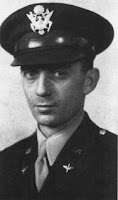
Jesse Marcel
formed the idea that the debris was left by something alien. Friedman quotes indirectly from Marcel (which means it is Friedman telling us what Marcel said), but I don’t know if the quotes came from that first conversation or if in writing the book and knowing the full story in the 1990s that he recreated the quotes from other, later interviews. Since this was a telephone interview using an airport telephone, I suspect there is no tape.

On April 7, 1978, according to Len Stringfield, he linked a Chicago reporter, Steve Tom (I use the term reporter though Stringfield actually identified him as an NBC radio newsman) to Jesse Marcel at his home in Houma, LA. Marcel again talked about the event, the strange material. According to Stringfield, Marcel said that when the press learned about the retrieval operation and “To get them off my back, I told them we were recovering a downed weather balloon.”

In his Status Report Number II, Stringfield wrote, “Since the Major’s story got publicity, it has been said by some researchers that the retrieved fragments were possibly part of the Skyhook balloon, at that time classified as Secret. On October 5, 1979, I called him and got this comment:

The material I gathered did not resemble anything off a balloon. A balloon, of any kind could not have exploded and spread its debris over a broad area… I was later told that a military team from my base was sent to rake the entire area.
I don’t know if Stringfield recorded any of these conversations with Marcel. After Stringfield died, his files were donated to MUFON which restricts access to them (and most of their other material). Those in the Chicago area might try to find a recording of Marcel on the NBC affiliate there in 1978, though I suspect Mark Rodeghier, who found the “Headline Edition” from ABC probably already checked on that.

Bob Pratt interviewed Marcel on December 8, 1979. I have posted the exact transcript of that interview to this blog at:


Karl Pflock published a cleaned up version of this in his book, Roswell: Inconvenient Facts and the Will to Believe. As I have noted, in his cleaned up version, some of the problems with the Pratt interview were, well, cleaned up. In one place the insertion of a comma changes the meaning of the sentence.

There is another point that raises questions and it surfaces in both the transcript and the article that Pratt wrote. According to that article:

Wreckage from the UFO “was scattered as far as you could see,” revealed Marcel who was awarded five air medals for shooting down five enemy aircraft on bombers in World War 2. [What a bizarre sentence from a professional writer.]
As we all know, Marcel was awarded two Air Medals for combat missions during that war. There are no indications that he shot down any enemy aircraft and I don’t know if the error was one of Pratt’s misunderstanding what Marcel said, or if it was a claim made by Marcel. I did ask Pratt if he had retained the tape recording but he told me that once the story had been published, they reused the tapes… It just shows that you never know what is going to become important.

Here’s what I do know at this point. The first Friedman interview was by telephone while Friedman was at the airport. Marcel didn’t say anything about the photographs and while in today’s world, if Friedman had photographs, he could have shown them to Marcel using the Internet, in 1978, that capability just didn’t exist. Besides, Marcel wasn’t sure of the date and it was Bill Moore who finally found the newspaper articles that included pictures of Marcel so Friedman didn’t have the pictures then and didn’t know they existed.

The subsequent Moore/Friedman interviews were apparently also conducted over the telephone, according to a quote attributed to him in Linda Corley’s book about Marcel and Roswell. According to her taped interview, Marcel said, “Now those guys, Charles Berlitz and William Moore, I bet I have spent as much as ten hours along these telephones with these two guys. I’ve never met either one of them.”

Corley questioned him on this point and Marcel said, “I never met them. They interviewed me on the phone.”

At that point, I’m sure that they have copies of the newspaper clippings some of which contained a picture of Marcel and the balloon wreckage and might have even gotten prints of the pictures from the Fort Worth Star - Telegram, but they couldn’t show these pictures to Marcel over the telephone. According to Berlitz and Moore, Marcel told them, over the telephone:

General Ramey allowed some members of the press in to take a picture of this stuff. They took one picture of me on the floor holding up some of the less-interesting metallic debris. The press was allowed to photograph this, but were not allowed far enough into the room to touch it. The stuff in that one photo was pieces of the actual stuff we found. It was not a staged photo. Then they allowed photos. Those photos were taken while the actual wreckage was already on its way to Wright Field. I believe these were taken with the general and one of his aides…
If we look at that, and the captions about where Berlitz and Moore got the pictures, we see that there was some manipulation going on there. They got a quote from Marcel that endorsed the picture of him with some of the real debris, but we don’t know if it was the whole picture or the cropped version they printed. What is clear is that when Johnny Mann showed him the pictures in The Roswell Incident, Marcel said they didn’t show the real debris.

Yes, I know some of the skeptics just can’t imagine Marcel not keeping copies of the newspaper articles that mentioned his name but then suggest the whole flying saucer brouhaha was such an embarrassment to him that he would, decades later, attempt to spin the story. But I know that things get lost as the years pass and I know that my picture appeared in the Denver Post in the early 1970s receiving a military award for service in Vietnam but I do not have a copy of that article.

I suggest that it is possible that Marcel, not having seen the heavily cropped pictures that would be published in The Roswell Incident because the interviews were conducted over the telephone, would remember pictures being taken at the time but might have not remembered the sequence. His statement about him being with the real debris when the pictures were taken could easily refer to another event and not what had transpired in Ramey’s office. So, when shown copies of the pictures from Ramey’s office, he rightly said, “That’s not the stuff I picked up.”

This seems to be a plausible explanation for this dilemma. He was photographed with some of the real debris, but those pictures were not taken in Ramey’s office. It wasn’t Marcel getting coached into what to say about it, but how he actually remembered the events. Though there is another problem with this analysis and that is Marcel told Corley that on orders for Ramey, he had covered the real debris with the brown paper that is seen in the uncropped versions of all the pictures taken in Ramey’s office. This suggests that Marcel’s memories of those events might not be completely accurate.

Jesse Marcel, standing and pointing, briefing flight crews during the Second  World War.
Photo copyright by Kevin Randle
There are other problems that arise from these transcripts of earlier interviews. Pratt said that Marcel was awarded five Air Medals for shooting down five enemy aircraft, but given Pratt’s transcript and other information, this mistake might be Pratt’s rather than Marcel’s. In the transcripts of the raw footage of UFOs Are Real, it said, “10 April 1942 volunteered for active service… 1st assignment Washington five Air Medals, the Bronze Star and several comendations [exactly as written out in the transcript].”

Since there is no mention of the five enemy aircraft, it would seem that the mistake was Pratt’s. The other problem is that there is only documentation for two Air Medals. As I have said before, my records did not contain the correct number of Air Medals, so we might have a similar situation. This just might not be sufficient reason to reject, out of hand, all that Marcel said.

What is more disturbing is his claim to have received a commendation for performing an appendectomy while in the service. This is something that should be recorded in his military record but I find nothing about it. I did find mention of another commendation for Marcel, but it was for service during Operation Crossroads. Maybe the commendation for the emergency surgery slipped through the cracks, but there comes a point when you can no longer blame Army inefficiency for the errors in the record (though I have said that if you do something wrong, that note has the permanence of the Pyramids and if you do something right it has the half-life of a mayfly).

There are two things I found in these transcripts that are interesting. First, Marcel said that after loading his car with the debris, “I stopped by the house had left the day before and son and wife were waiting for me.”

This is curious because the story had always seemed to be that he had awakened them to show them the strange debris. This suggests that he had stopped by so they wouldn’t worry and that it wasn’t very early in the morning but late evening. A minor problem at best.

In the transcript (which, by the way, is strange) it is noted that on “Tape 2” at the 24:16 minute mark, Marcel apparently told them that Haut had issued the press release before he had even returned from the field. The exact quote on this transcript is, “He (Walt Haut had released statement to press before Jesse had even returned home that night.” (Yes, this is how it was written out, so it is not exactly Marcel’s words.)

Apparently Marcel said that his wife had been “pestered by the news media.”

In Linda Corley’s book, Marcel makes a similar statement. He said, “She [wife] didn’t even know where I was. By the time I got home, she had already faced the press that was out there.”

What this does is screw up every time line created for this because we have the press release going out before Marcel got home… which had to be late afternoon at best given the distance from the debris field to Roswell even making the best time possible. Then we need to get Marcel on an aircraft early enough to get to Fort Worth in time to have his picture taken with the balloon debris.

It is possible, of course, that Marcel had confused coming home from the debris field with his coming home from Fort Worth after his quick trip there. He seems to have mixed up elements of the two events, confusing the timing, but then, that is just my speculation.

Then it gets worse, if possible. Marcel is quoted in the transcript, apparently paraphrasing General Ramey, “You can go ahead and scatter some of those pieces on the floor for the photographers and press but make sure they don’t get any details about anything.”

There was a question, “Was that the actual material you had found?”

“I prepared that for the press. (That big piece was not part of it). [parens in original document.]”

And then it gets better. Marcel said, “Let me show you something. There’s a picture of the same room [Ramey’s office, I will assume here] It’s not the material I brought there.”

Then on “Tape 3” comes more information. The director or the interviewer or the one asking questions said, “I talk about book I’m showing him [Which has to be something with the various pictures from Ramey’s office.] Book in Jesse’s lap showing warrant officer [has to be Irving Newton and that rules out The Roswell Incident]. The director asked, “This is not the material you found?” Marcel said, “Definitely not.”

The trouble here is that Marcel in the same film said that if he was in the photographs it was the real stuff and if it was anyone else, it was the fake. But now we learn that he was shown those photographs during that filming and before anyone could teach him the right answer, said that it wasn’t the material he had brought from Roswell.

The questions then, have been answered, sort of. We learn that the first interview was probably not recorded and are treated to Friedman’s recollections of what was said. We learn that the interviews of Marcel by Berlitz and Moore were conducted over the telephone. We do find quotes from Marcel that seem to contradict the story as it has been told for all these years which is quite troubling. And we find other quotes that seem to support that story, which suggests some manipulation by the various UFO researchers. Is it enough to reject now what Marcel said? Depends on your point of view, but we do have more information that suggests Marcel’s memories are not completely reliable on many of these points and at this time, that might be the best we can do.


(Note: For those interested, this has grown much larger than I anticipated. I looked through Marcel’s service record again, I reviewed the other material in that file, rereading after decades some of the partial transcripts that I have which provide some disturbing information, looked again a Linda Corley’s book to see what she said about the early interviews with Marcel, and reviewed what Friedman had published. There is more to this story, which I’ll get into some form for publication.)

Sunday, November 15, 2015

The Timing of the Roswell Photographs

It has long been the contention of those who worked with J. Bond Johnson on the attempt to read the Ramey memo that Johnson did not take the two photographs of Jesse Marcel holding up what looks to be debris of a weather balloon. I never really understood why that was so because the pictures seemed to be of the same quality as those that Johnson did say he took.

The Roswell Photo Interpretation Team including Ron Regehr and Neil Morris, determined by looking at the shadows and sunlight as seen through the curtains
Ron Regehr (Photo copyright
by Kevin Randle
in Ramey’s office that the pictures of Marcel were taken at 3:15 p.m. and that would have been Tuesday afternoon, July 8, 1947. Given the timing of the events, as they have reconstructed them, this means that Johnson couldn’t have taken those two pictures. And, if their estimate of the time is correct, then their assumption is also correct.

I have never understood exactly how they made this interpretation. They talked of measuring shadows seen outside of Ramey’s office, but I don’t know if they had ever been to the base to make measurements, if the building in which Ramey had his office can be identified if it is still standing and how they determined the precise angle of the sun on July 8, 1947. What it is today doesn’t necessarily match what it would have been in 1947. Or, to put it in fewer words, I believe they made many assumptions to come up with the conclusions they wanted.

Here’s what we know based on the documentation. According to the time line published in the Daily Illini on July 9, the first of the AP alerts sounded at 4:26 p.m. Central Time (Fort Worth), or 3:26 Mountain Time (Roswell). Since Johnson had said, repeatedly he learned of the debris coming to Fort Worth from his editor and it seemed that the editor had the news bulletin, that means Johnson couldn’t have received word until after the Marcel photographs were taken.

The RPIT has concluded that there was another photographer there about two hours before Johnson arrived. It was this other photographer who took the two pictures of Marcel. Johnson at one point said that another fellow who worked at the newspaper in 1947 said that Ramey owed them a favor and had called the Star – Telegram to alert them about the situation. It was this man, never identified by Johnson or anyone else, who had taken those first pictures.

The problem here is that no one has ever come forward to claim to have taken the pictures of Marcel. After all the publicity surrounding these events, after all the times the pictures have been shown on television or published in books and magazines, it would seem that the man (and since this was 1947 I’m assuming it was a man) would have appeared to tell us that. Johnson, after all, and according to his own words, had been to Fort Worth to try to find his pictures after he had seen them on a television show or two.

And then there is where the negative of Marcel was filed. It was in the same envelop at the University of Texas – Arlington Library Special Collections as those of Ramey. That means the picture came from the Fort Worth Star – Telegram and that means they were taken by a photographer from that newspaper. But, again, according to Johnson, he claimed more than once he was the only one dispatched from there and to hear him tell it, he was the only one who took photographs in Ramey’s office, overlooking or belittling the picture of Irving Newton crouched in front of the same debris in relatively the same locations as it appears in the other photographers.


There is something else in all this. Johnson said that when he returned to the newspaper office, there was a “whole barrage” of people waiting for him. These were technicians from Dallas who had brought transmitting equipment to Fort Worth so that they could send a picture over the news wires. Johnson was told to develop the film and bring out a wet print because they were in such a big hurry to see what had been found and to get it out over the wire.

But, if there had been another photographer there, who could have been from a newspaper in the area though Johnson said it was from the Star – Telegram, he would have had, at the very least, a two hour head start on Johnson. His pictures,
Jesse Marcel with a view of the opening in the
curtains. Photo copyright by the Special
Collection, UTA.
of Marcel, would have gone out over the news wire probably before Johnson could have returned to his office in Fort Worth with his pictures, though there is no evidence of this. While Johnson’s pictures would have been important because they would have been different, they wouldn’t have been so critical that his editor wanted a “wet” print. They could have waited for Johnson to dry them properly. And, there is no indication from any of the archive services that any other picture, except the one of Newton which is clearly different than those first six, were ever taken.

Johnson had to be the photographer and the estimate of the time of the photographs based on looking through a slit in the curtains of Ramey’s office seems to be an amazing bit of deduction. The documentation from the time, Johnson’s own recollections of what he had been told and then related to me in the first two interviews he had ever given (yes, I was the first to interview him… I know this because I found in my notes that I had asked him about it and he said that no one had ever interviewed him) that Ramey told him it was a weather balloon, and what was written in that very first article in the Star – Telegram, sinks much of what he said later.

I won’t even bother to go through all of that again. Much of the information gathered in those first two interviews appeared in the International UFO Reporter (March/April 1990) and (November/December 1990). These articles outline the first interviews with Johnson and our (Don Schmitt and me) attempts to make some sense out of everything. The second article outlines the alterations in Johnson’s statements after his “interviews” with Bill Moore and Jaime Shandera. The critical interviews, that is, the ones I conducted are on tape.


The trouble here is that Johnson told so many stories, modified, changed and deleted information almost at a whim. We can believe the things that are corroborated by others and documentation and we can reject nearly everything else. Johnson’s desire to become an important part of the Roswell story ended up changing him from a valuable witness into just another clamoring for his fifteen minutes of fame regardless of the facts.

Monday, November 09, 2015

J. Bond Johnson's Statement on His Visit to General Ramey

Since it has been suggested that Ramey had invited reporters from the Fort Worth Star-Telegram to his office, and since some of the quoted material came from a web site that hosted an interview with J. Bond Johnson, the reporter, I thought I could clarify some of this by posting the following. This is from my second interview with Johnson, made about a month after he called me, left his telephone number on my answering machine asking me to return the call. I note here that Johnson claimed I had called him cold and he had no opportunity to review his notes or the
Johnson's picture of General Ramey
holding the memo. Photo copyright
by the University of Texas at Arlington.
newspaper articles that appeared in 1947… though in the first interview he actually reads the July 9, 1947 article that he claimed to have written. Or, in other words, he was not called cold. There are other indications in that interview that he had already reviewed his “UFO” file, that he had talked to Betsy Hudon at the University of Texas at Arlington, and he was aware that she had forwarded a copy of my letter to him which gave him my telephone number. She wouldn’t tell me who he was but she did say she would forward a letter to him to facilitate our communication.

In my March 24, 1989 interview, I said, “Could you just sort of tell me what you did… what transpired when your editor gave you the assignment to go out to the base.” In response, Johnson said:

My name is initial J Bond, it’s also James Bond Johnson. I’m the original [referring obviously to the master spy by the name of Bond, James Bond). I was a reporter and back up photographer for the Fort Worth Star-Telegram in July 1947 after having served in the Air Corps as a pilot-cadet in World War Two.
On the… Tuesday, July 8, 1947, late in the afternoon, I returned from an assignment to my office in the city room of the Fort Worth Star-Telegram which was both a morning and afternoon newspaper. My city editor of the morning paper ran over and said, “Bond, have you got your camera?” I said, “Yes,” I had it in my car. I had a four by five Speed Graphic that I had bought recently and I kept it in the car because I was working nights and police and so forth and had it at the ready. He said, “Go out to Ramey’s office and, he said, they’ve got something there [and] that to get a picture. I don’t recall what it he called it. He said they’ve flown something down… I don’t think he called it something… he gave it a name because I was kind of prepared for what I was going to see. He said something crashed out there or whatever and they’re… we just got an alert on the AP wire [emphasis added to prove a point] … though it might have been the UPI… that the Air Force or the Air Corps as it was called then [actually it was the Army Air Forces in July 1947] is flying it down from Roswell on orders from General Ramey. It would be located in his office. It was or would be by the time I got out there.
So I drove directly to Carswell [Fort Worth Army Air Field in July 1947] and my recollections now are I went in and I opened my carrying case with my Graphic and I had brought just one holder with me with two pieces of the 4 X 5 film. Black and white of course. I posed General Ramey with this debris piled in the middle of his rather large and plush office. It seemed incongruous to have this smelly garbage piled on the floor… spread out on the floor of this plush, big office that was probably, oh, 16 by 20 at least.
I posed General Ramey with this debris. At that time, I was briefed on the idea that it was not a flying disk as first reported but in fact was a weather balloon that had crashed. I returned to my office. I was met by a barrage of people that were unknown to me. These were people who had come over from Dallas… In those days, any time we had… we normally bussed any prints that we were sending to the AP, we bussed them to Dallas to be transmitted on the wire photo machines. We had a receiver but not a sender in Fort Worth in those days. And no faxes.
After a discussion of how they transmitted the pictures and we chatted about all the pictures including the ones of Major Jesse Marcel that Johnson would later claim he hadn’t taken, he said, “It is entirely possible that I was briefed by the PIO.”

We can take this even further. Dennis Balthaser published an interview with Johnson that can be found here:


During that interview, Balthaser said, “Finally, another researcher seems to remember a statement you made that the paper in General Ramey’s hand was a press release that you handed to General Ramey. Can you verify that as a true statement you would have made in a previous interview? If yes, please explain.”
Johnson said, “Yes, that was an early speculation of mine that I might have handed Ramey the copy of the AP ‘flash’ my editor had given me regarding the Roswell crash craft being flown to Fort Worth. Obviously I was in error in that speculation.”

What all this shows is that the information about the debris going to Fort Worth was in an AP news alert and had nothing to do with Ramey inviting people out to the base. We don’t have to speculate about this because we have the information from the reporter who was involved in it provided before he began think of himself as “the Roswell photographer.”

We can corroborate all of this from the news stories that appeared at the time and the chronology that was published in the Daily Illini. I also recovered a transmittal letter sent with the photographs that gave the date as July 8, 1947, the time as 11:59 p.m. and the photographer as J. Bond Johnson.  Later, we can see that Johnson dramatically altered his story attempting to put himself into the spotlight. He went so far as to deny that he had written the story that appeared in the Fort Worth Star-Telegram on July 9, a story that he had told me he had written. He said during my first interview with him, “Seven nine [July 9] is my story on the front page that was in earlier … [which, of course, negates the idea that I called him cold and he hadn’t reviewed his UFO file].”

The problem for Johnson’s claim that they didn’t know what it was when he was there is the last paragraph in that article. It said, “After his first look, Ramey declared all it was was a weather balloon. The weather officer verified his view.”

For those who wish to follow this to its end, I did a blog posting on October 9, 2009, about the whole Johnson tale. It can be found here:


This then should end the idea that Ramey invited anyone out to his office. The story was on the news wire and the astute editors and reporters would think of calling Ramey on their own. He received telephone calls from far away and even did a telephone interview with a reporter on the West Coast. The idea that it was a weather balloon quickly killed the story and just hours after it broke on the news wires the interest faded.


But the point is that Ramey did not call anyone and invite them to his office. The testimony and the evidence negates that idea. Johnson may have well taken the teletype alert with him but we don’t know. He might well have taken it into General Ramey’s office but we don’t know. The evidence for that is contradictory because Johnson spun many tales about what he did and didn’t do in General Ramey’s office. However, given what we can prove, it would seem that we no longer have to speculate about the reason Johnson went out to the base.